A sword sport for kids under ten. Sounds wild, right? It’s actually one of the most disciplined games your child can watch, draw, or dream about. Fencing teaches balance. Focus. Respect. And it turns out, coloring a fencer mid-lunge does more for a young brain than you’d think. Fine motor skills. Attention to detail. A little bit of Olympic-sized imagination, too.
Grab Your Free Fencing Coloring Collection Today
We’ve put together a full set of fencing coloring pages, ready for your printer right now. Masks, foils, footwork, medals — it’s all here, waiting for crayons.
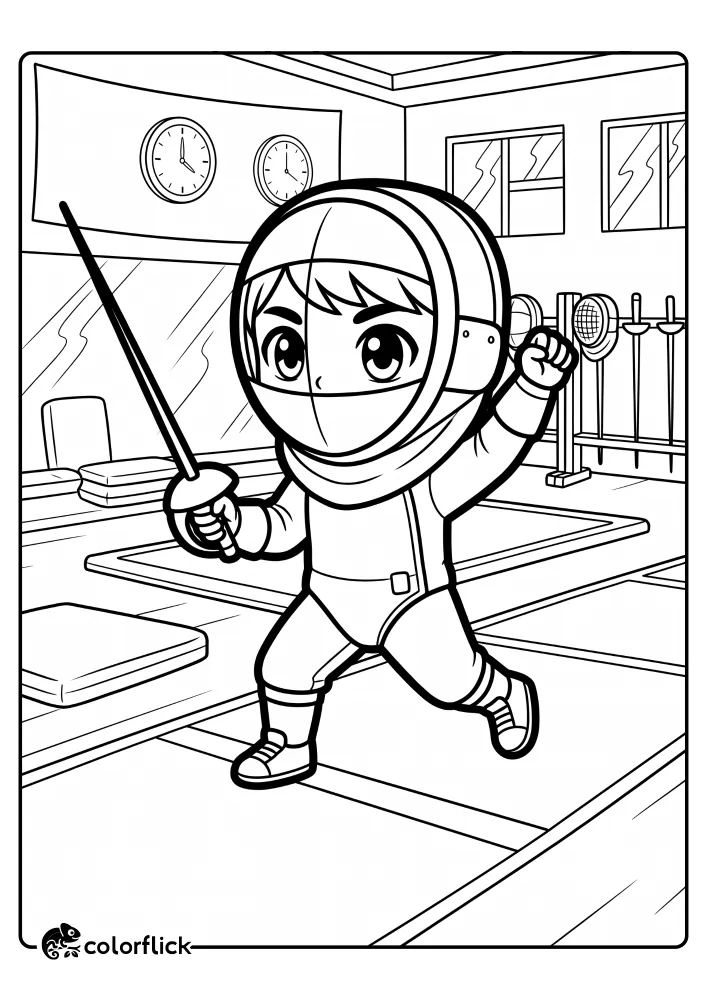
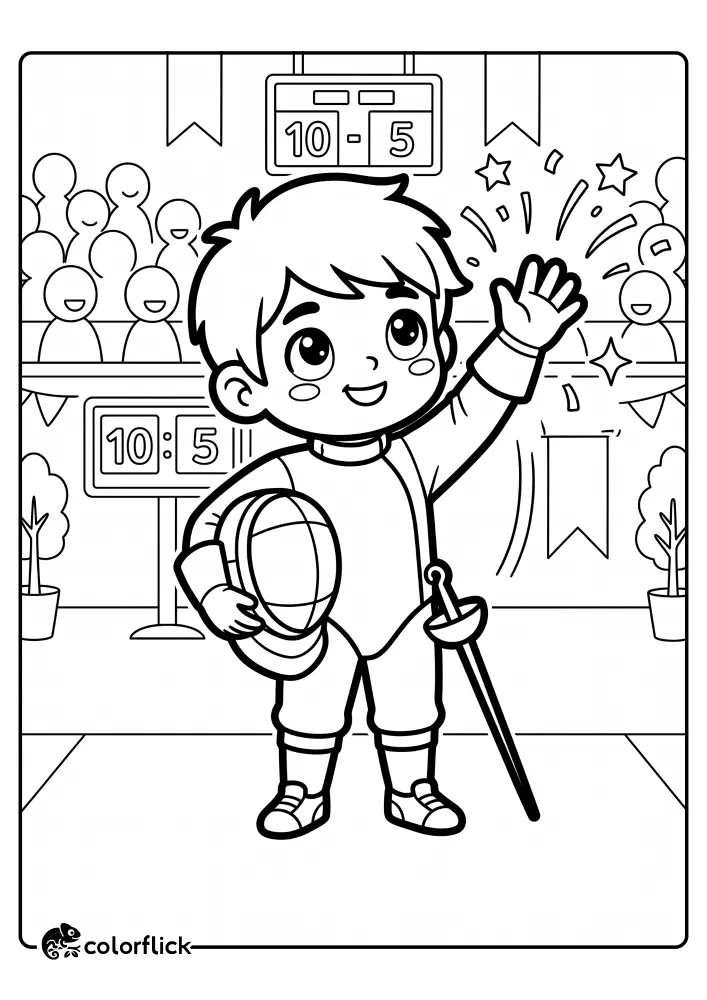
Fencing Sport Coloring Pages for Kids
Two opponents. Special weapons. Controlled touches that count as points. That’s fencing in a sentence. Kids coloring these scenes start noticing posture, action lines, equipment shapes — details that build real focus over time. There are three weapons in the sport: foil, épée, and sabre. Each one has its own personality. And here’s a fun bit for trivia-loving kids: fencing has been part of the Olympics since the very first modern Games.
Fencing Mask, Jacket, and Gloves Coloring Pages
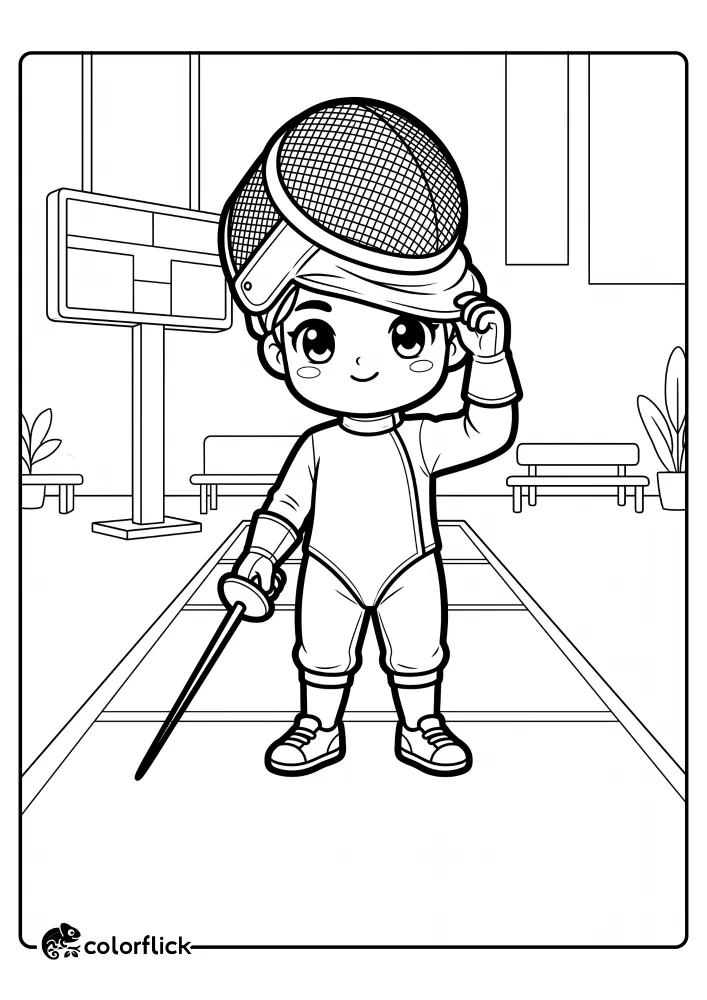
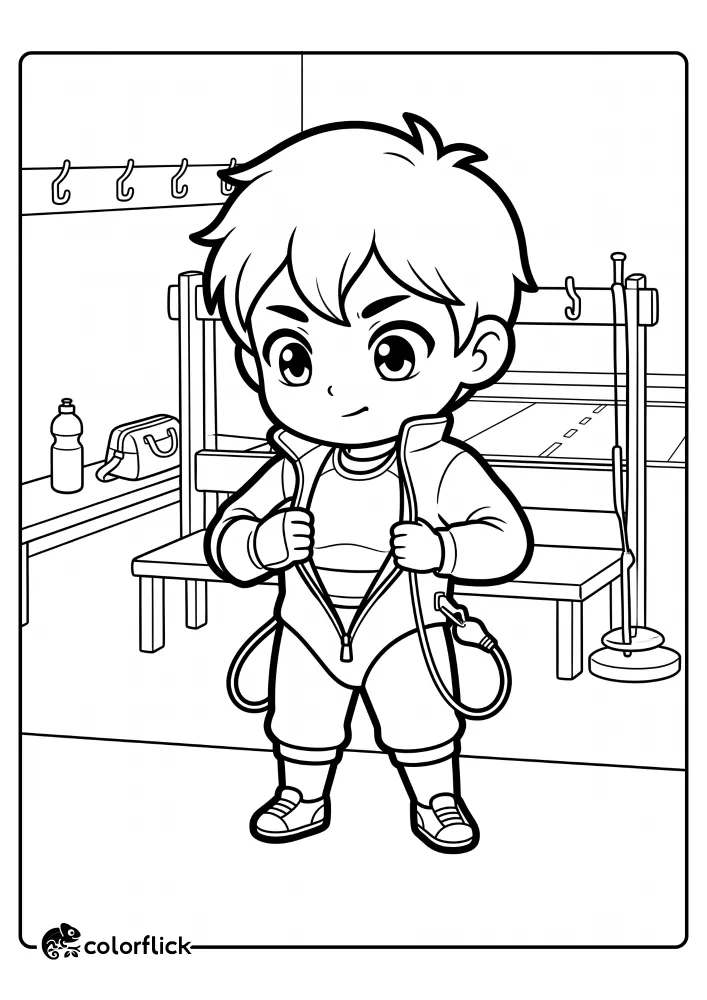
The gear tells its own story. A mask with tiny grid holes. A stiff white jacket. Thick gloves built for grip and safety. These pieces protect fencers so they can move fast without fear. For young colorers, the mask’s grid pattern and the jacket’s seams offer clean, satisfying lines to fill in. Along the way, kids pick up new words — mask, jacket, glove — almost without trying.
Fencing Stance and Footwork Coloring Sheets
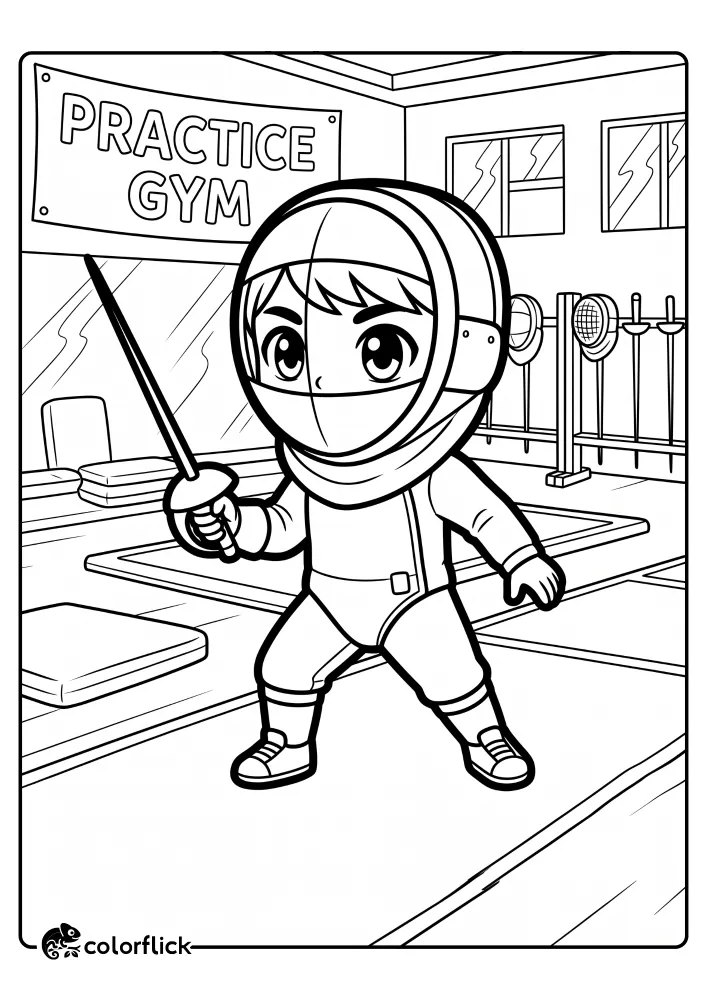
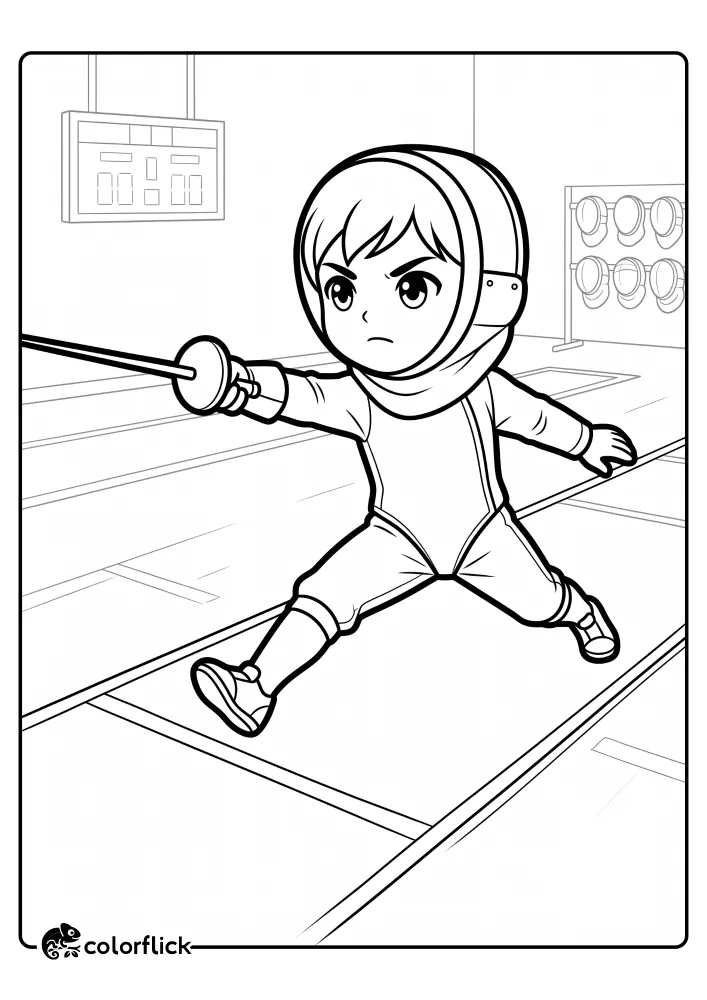
A fencer squares up. Knees bent. Weight ready to spring forward or snap back. This is the “en garde” position, and it’s the base for everything that follows — the lunge, the retreat, the quick recovery. Coloring these action poses trains a child’s eye to read movement and direction in a still image. Slow down here. The limb positions are easy to rush past, but they hold the whole story of the pose.
Fencing Target and Point Scoring Pages
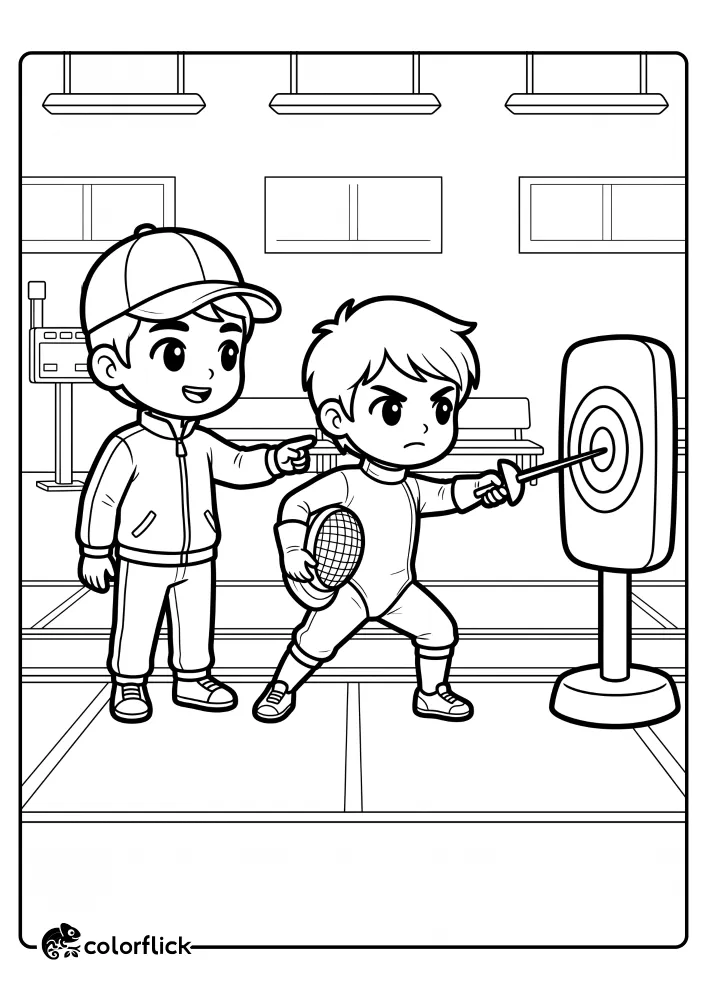
Here’s where it gets a little like a puzzle. Points only count when a touch lands on the right target area, and referees are the ones who make the final call. A single match can hinge on a fraction of a second. That timing pressure is part of what makes fencing so mentally sharp. For kids, coloring the target zones and scoring lights turns a page into a rules-and-colors challenge — cause and effect, right there on paper.
Olympic Fencing Coloring Pages for Kids
Fencing didn’t start as a polished sport. It grew out of older sword traditions, slowly picking up formal rules and regulated technique until it earned its place on the Olympic stage. Today it stands for skill, composure, and fair competition at the highest level. Pages built around this Olympic theme tend to spark ambition in kids who already love medals, uniforms, and big, dramatic action scenes.
Fencing Respect and Sportsmanship Coloring Pages
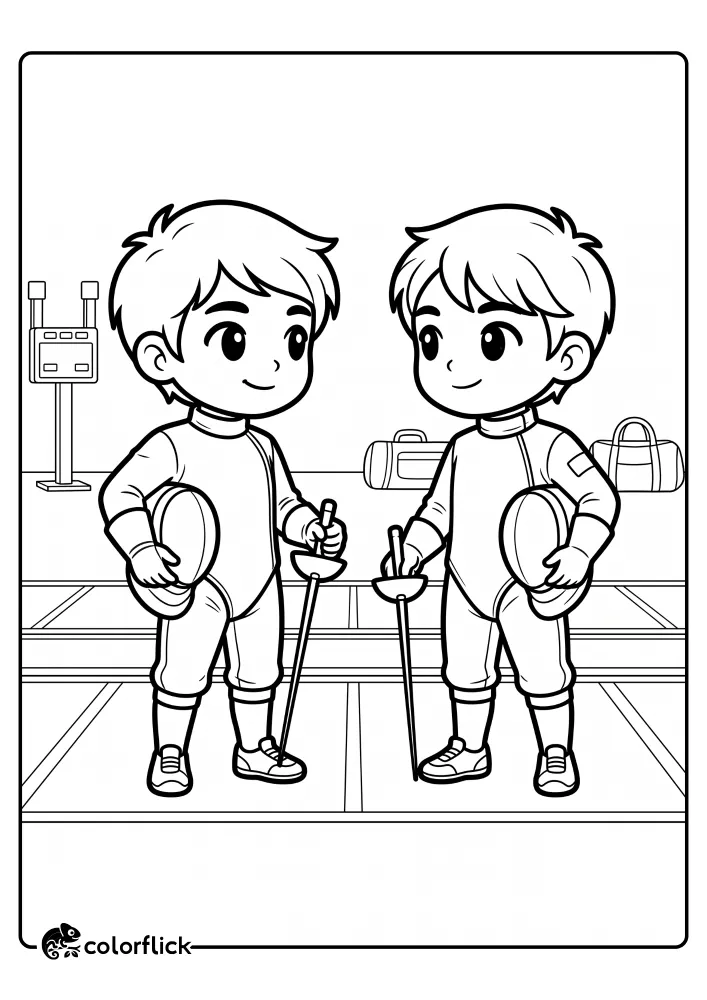
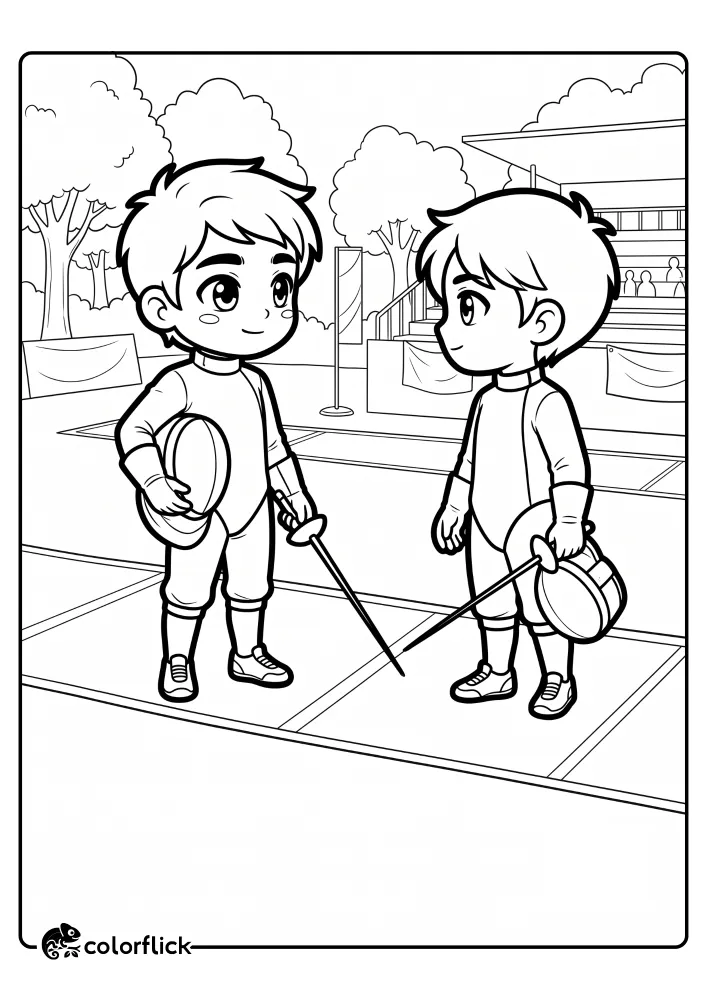
Before a bout starts, fencers greet each other. After it ends, they do it again — win or lose. That small ritual carries a big idea: respect for your opponent, your referee, and the rules themselves. Coloring pages built around this theme connect art to something deeper than technique. Kids exploring these scenes are quietly absorbing words like respect, fair play, and etiquette, one crayon stroke at a time.
Is Fencing Coloring Right for My Child?
Is it safe and appropriate for kids? Absolutely. These pages teach sport concepts, protective gear, and controlled movement — no physical contact required.
What age fits best? Older preschoolers and elementary-age kids usually get the most out of it. They’re old enough to appreciate the equipment details and the story behind each pose.
Wrapping Up the Fencing Adventure
Fencing gives kids a rare mix — sharp focus, quiet discipline, and just enough drama to keep things exciting. Every mask, every lunge, every scoring light is a small lesson in patience and control. Grab your crayons, print a few pages, and let your child step into the piste. Don’t forget to visit our full gallery for the entire free fencing coloring collection.