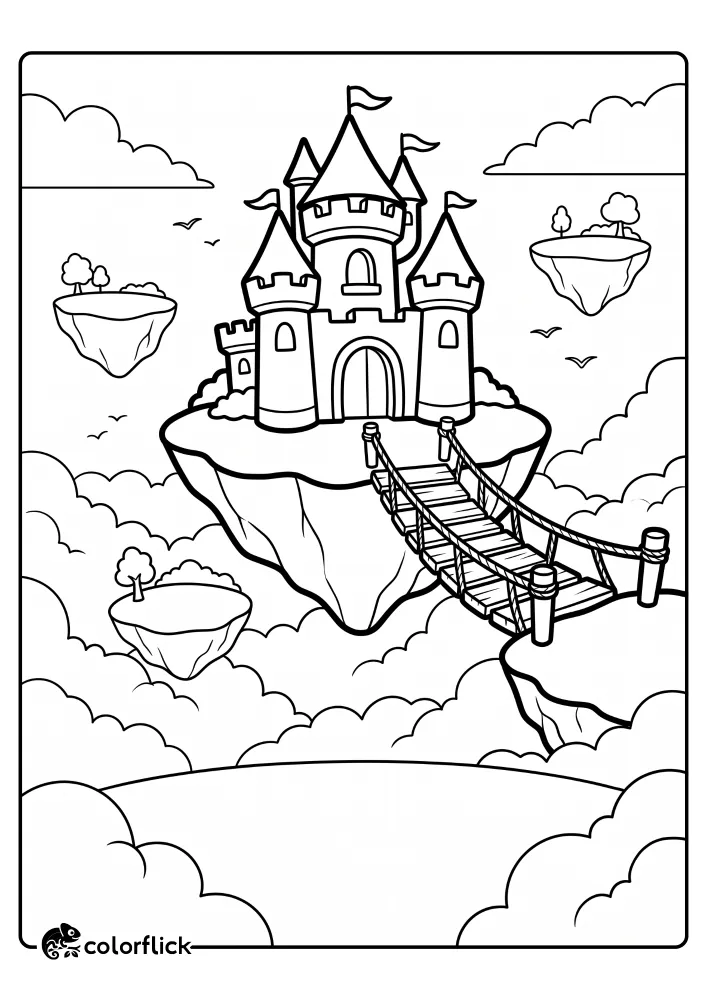
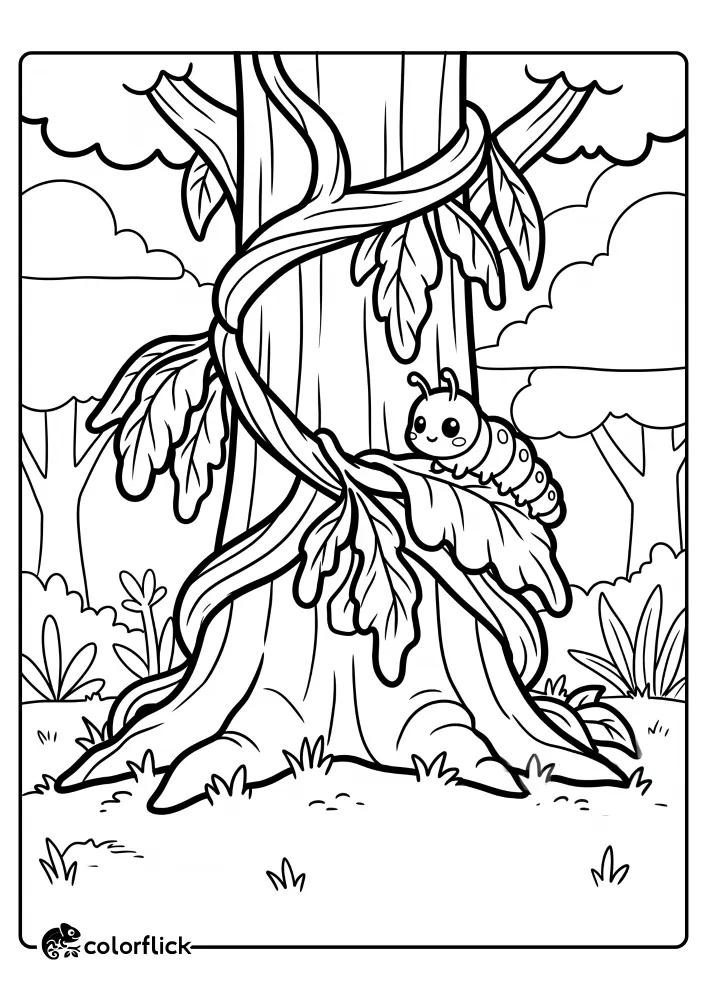
Forests hold secrets. Ancient trees, glowing lights, hidden creatures tucked behind every leaf. A mystical forest coloring page isn’t just pretty paper. It’s a doorway. Much like exploring other fantasy landscape coloring pages, kids step into layered ecosystems, spot fungi doing quiet decomposer work, and practice fine motor skills without even noticing they’re learning.
Ready to Explore the Whole Woodland Collection?
We’ve gathered a full, free set of mystical forest scenes, ready whenever your little explorer wants to print and color. Trees, trails, fireflies, fairy homes — it’s all here.
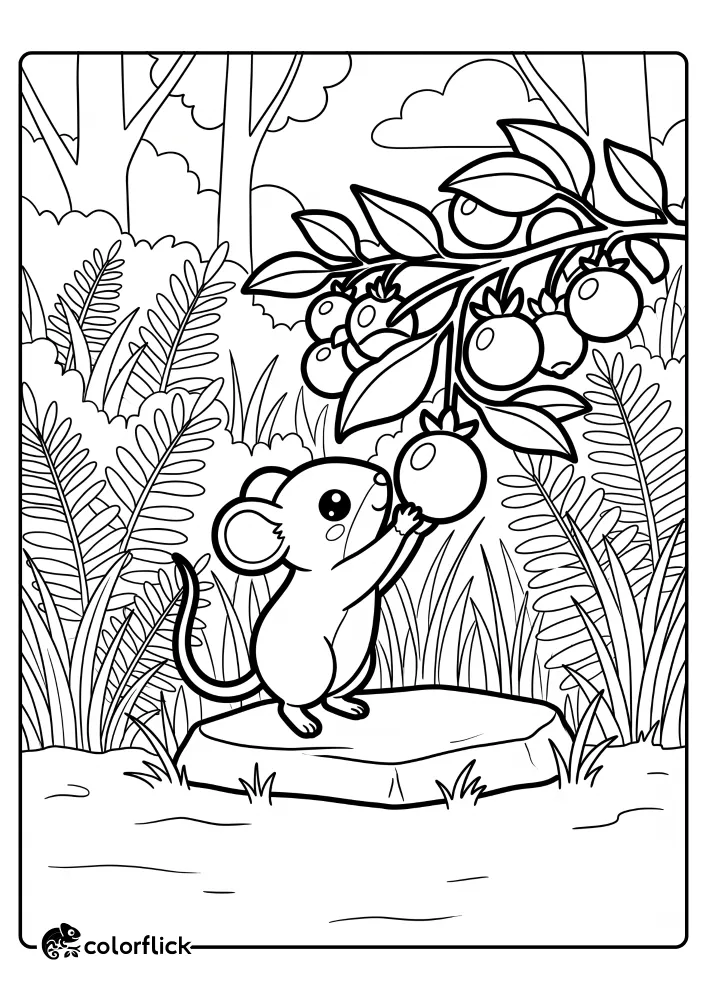
Ancient Trees Reaching for the Sky
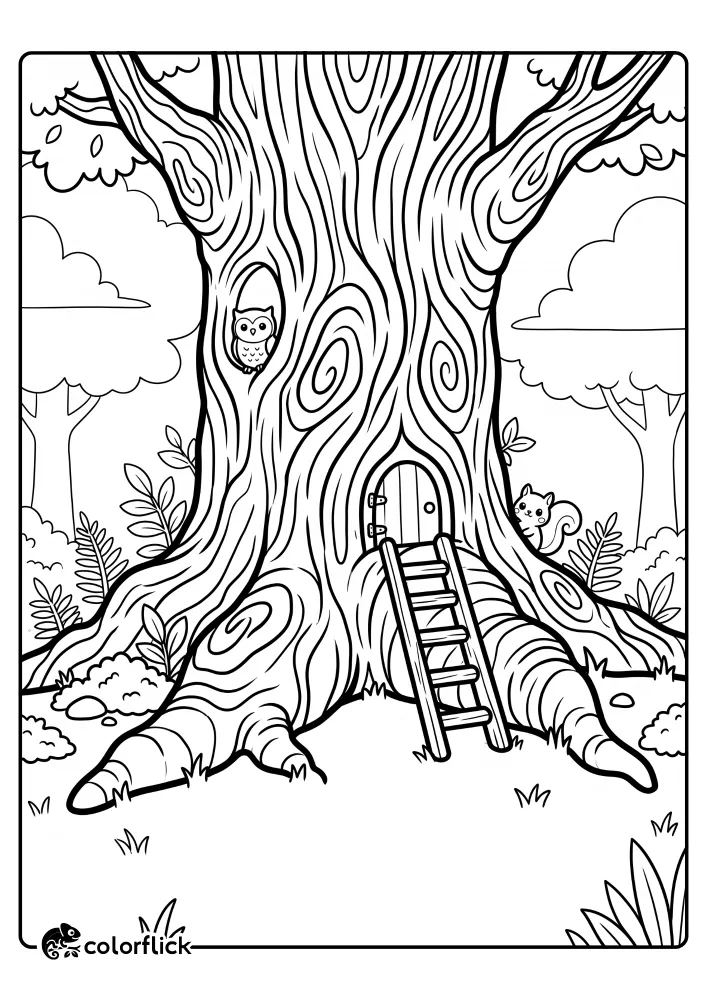
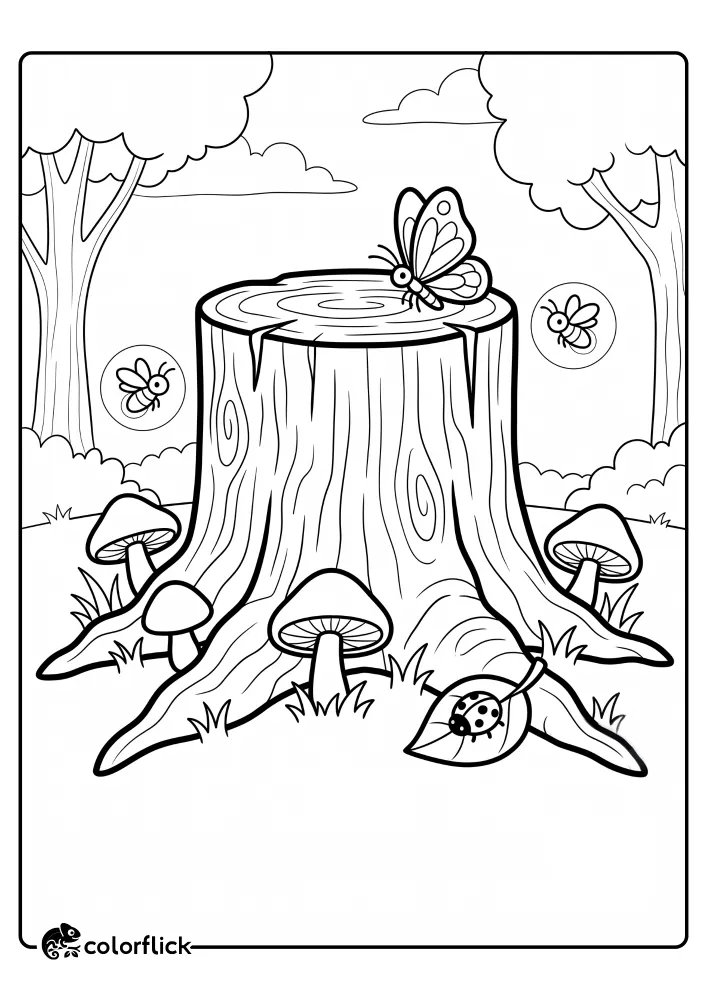
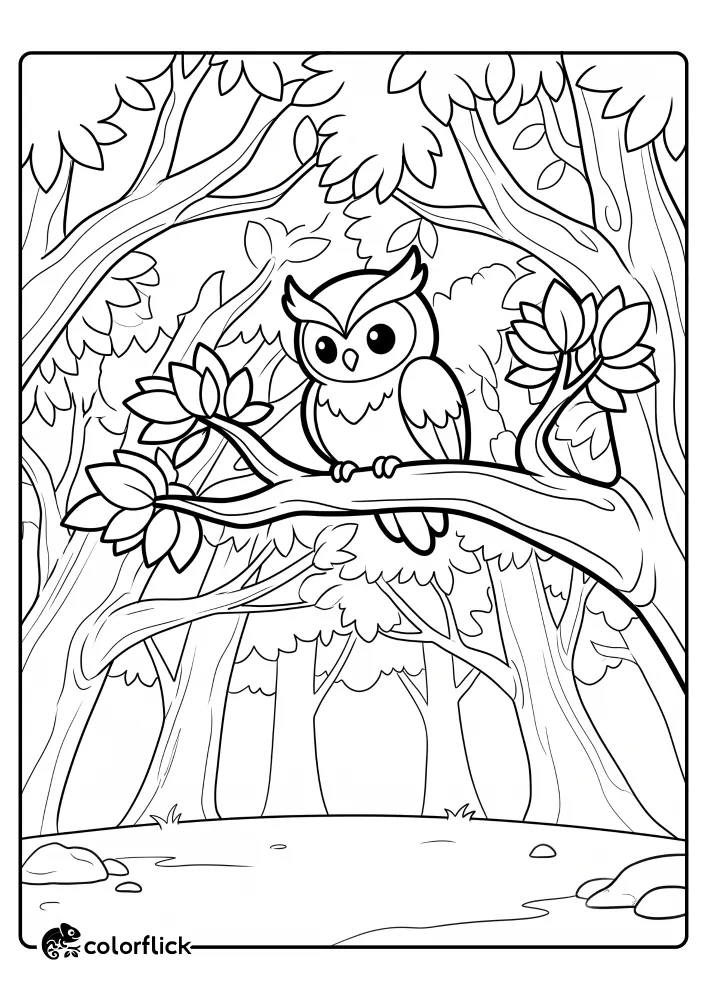
Old trees hold up the whole forest. Their branches spread wide, catching sunlight and casting shade over everything beneath. That upper layer shelters birds, softens wind, and shapes the entire woodland climate. For kids, coloring these massive trunks means practicing proportion and spatial planning — figuring out where bark texture goes, where shadows fall, where branches split. Big shapes, small decisions. It’s quiet skill-building disguised as fun.
Tiny Mushrooms, Big Job
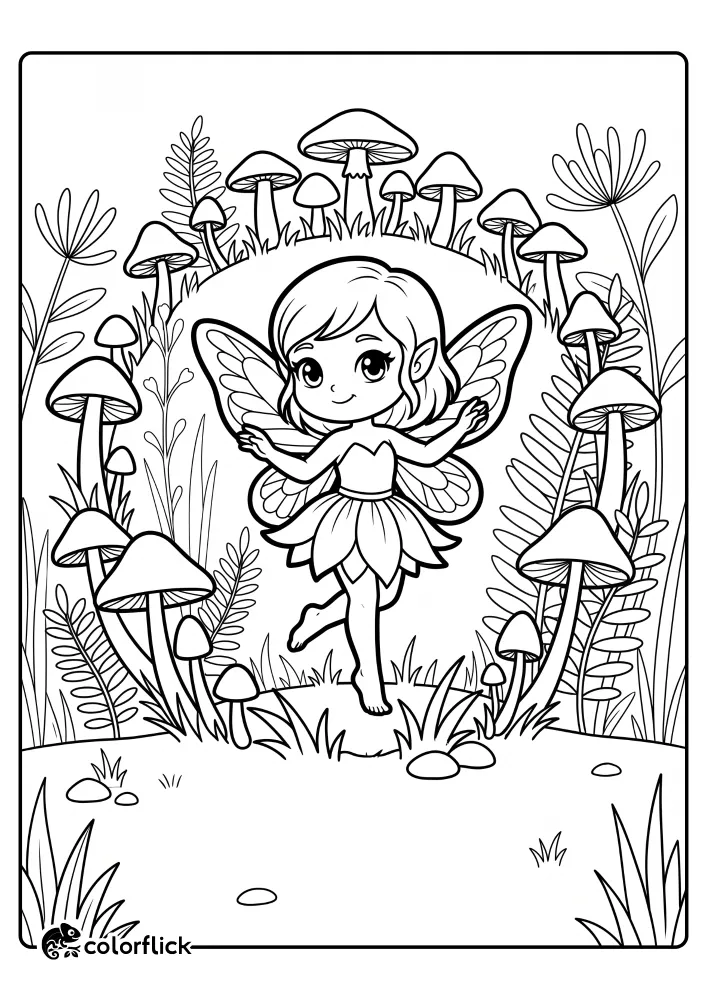
They look small. Their job isn’t. Mushrooms aren’t plants — they’re fungi, and they spend their days breaking down dead leaves and fallen wood, feeding nutrients back into the soil. Without decomposers, forests would drown in debris. Kids coloring mushroom clusters practice spotting size differences and repeating shapes, all while building curiosity about hidden life underfoot. Folklore loves them too — fairy rings, those mysterious circles of mushrooms, show up in old woodland tales as magical gathering spots.
Fireflies Blinking Through the Dark
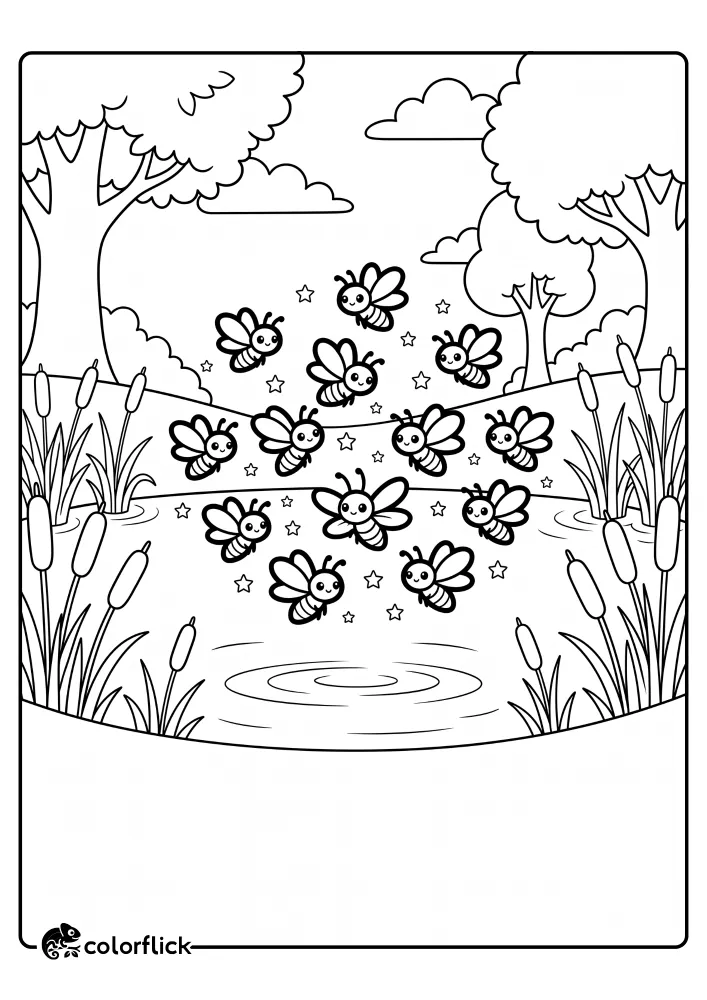
A single spark of light in a dark scene changes everything. Fireflies create their glow through bioluminescence, a natural chemical reaction they use to find mates and talk to each other in the night. On paper, that glow becomes a lesson in contrast and spacing — where to place light, where to leave dark. Children start noticing mood, atmosphere, how a few glowing dots can make a whole page feel alive and quietly magical.
Creatures Hiding in Every Corner
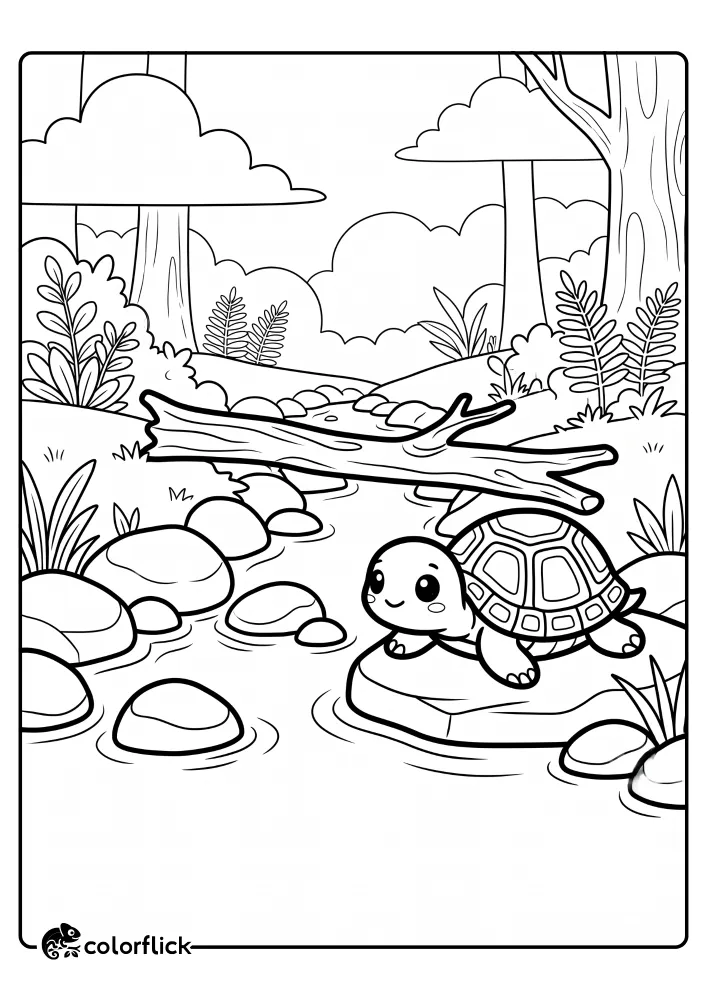
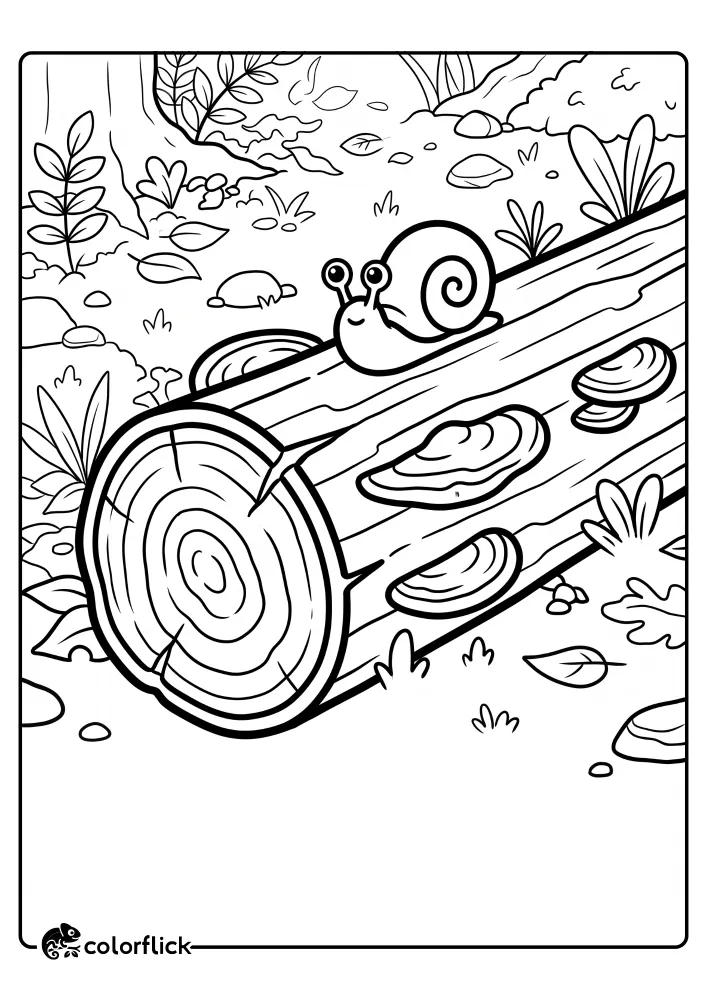
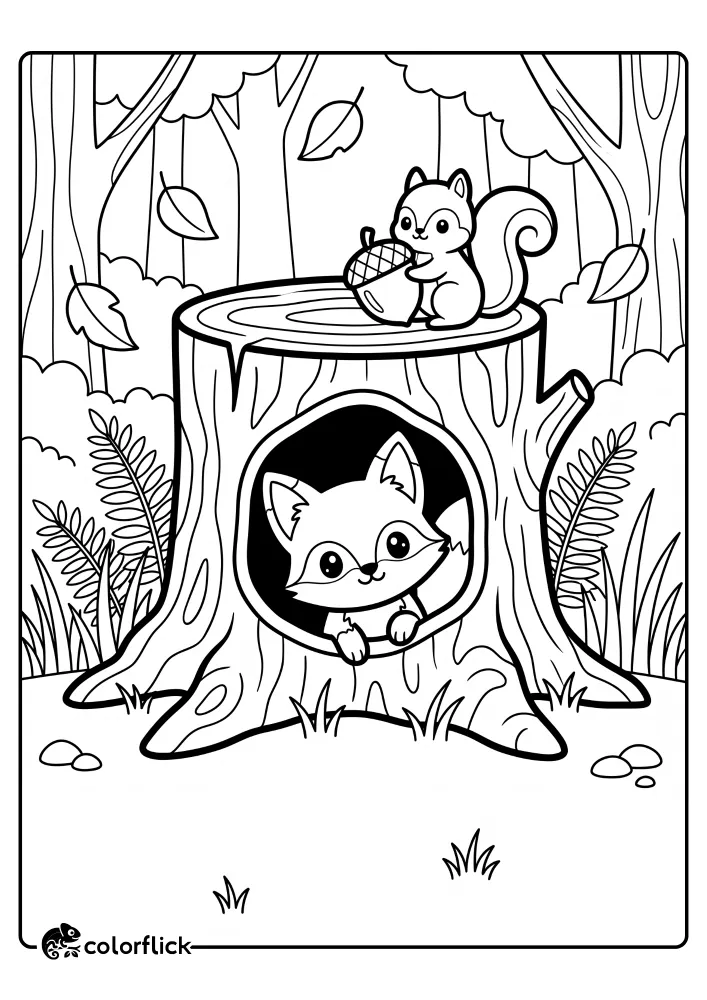
A child leans over the page, hunting. There — behind that trunk, a small shape. Forest animals split up the woodland by height and need: insects on the ground, birds up in branches, everyone sharing space differently. Spotting and coloring these hidden creatures sharpens visual scanning and memory, and almost always sparks a story. Kids name them. Give them homes. Send them on missions. A simple habitat becomes an entire adventure.
Trails That Lead Somewhere Magical
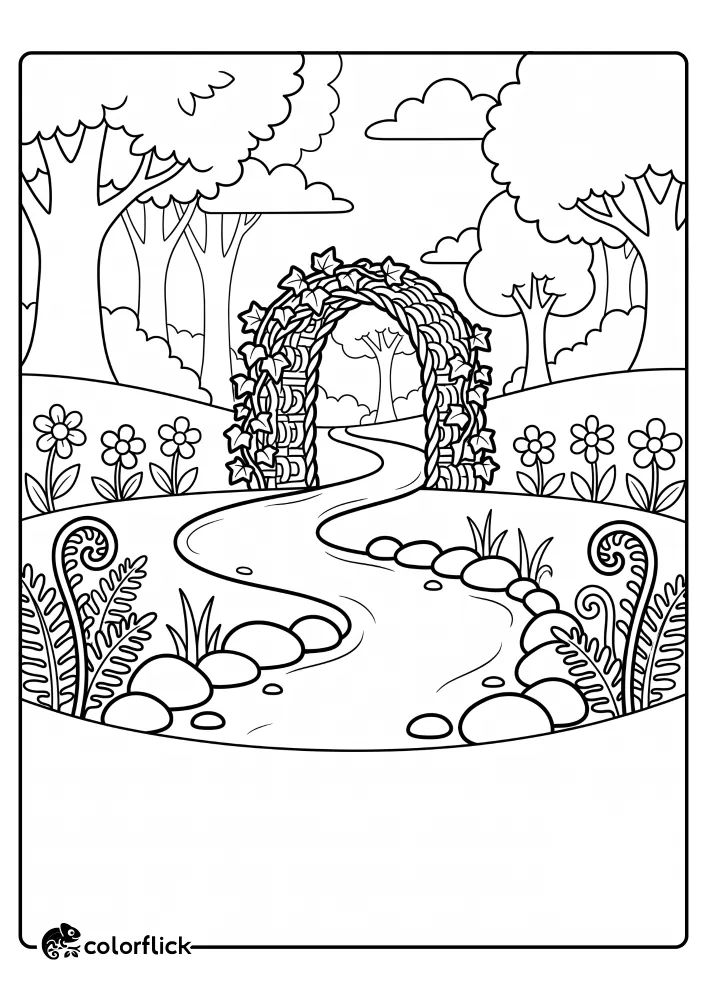
Paths do more than connect two points. In a forest scene, a winding trail creates distance, direction, depth — pulling the eye from front to back across the page. Real woodland trails form the same way, connecting clearings, water, and shelter. Coloring a path teaches foreground-to-background thinking, one of the earliest steps toward understanding perspective. And there’s something satisfying about a trail — earthy, soft, leading somewhere unseen.
Fairy Houses Built From Forest Scraps
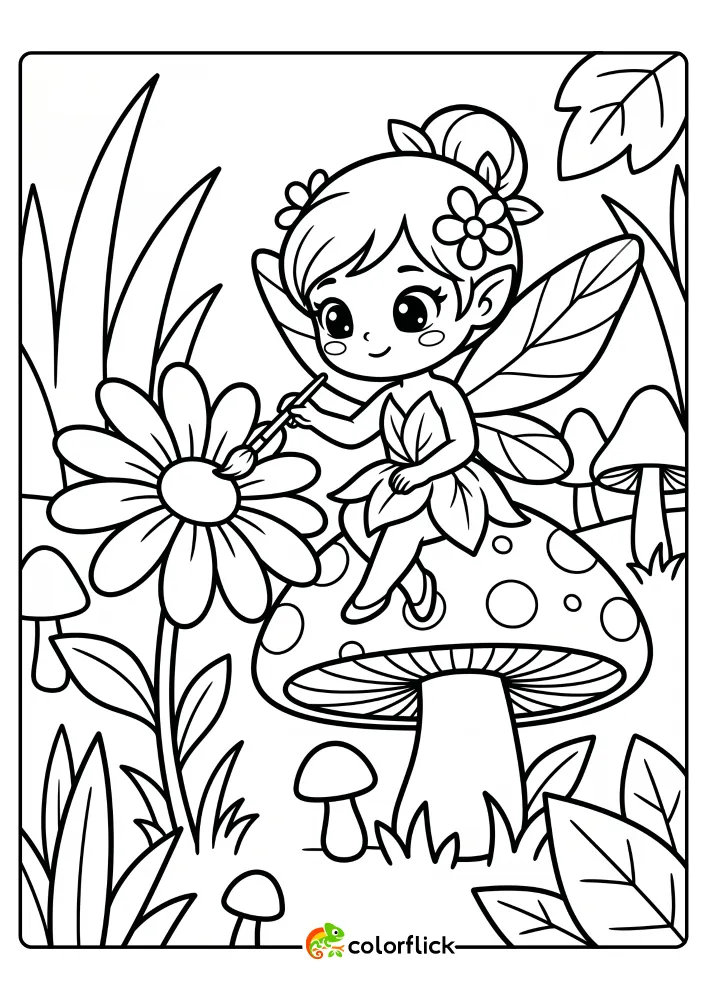
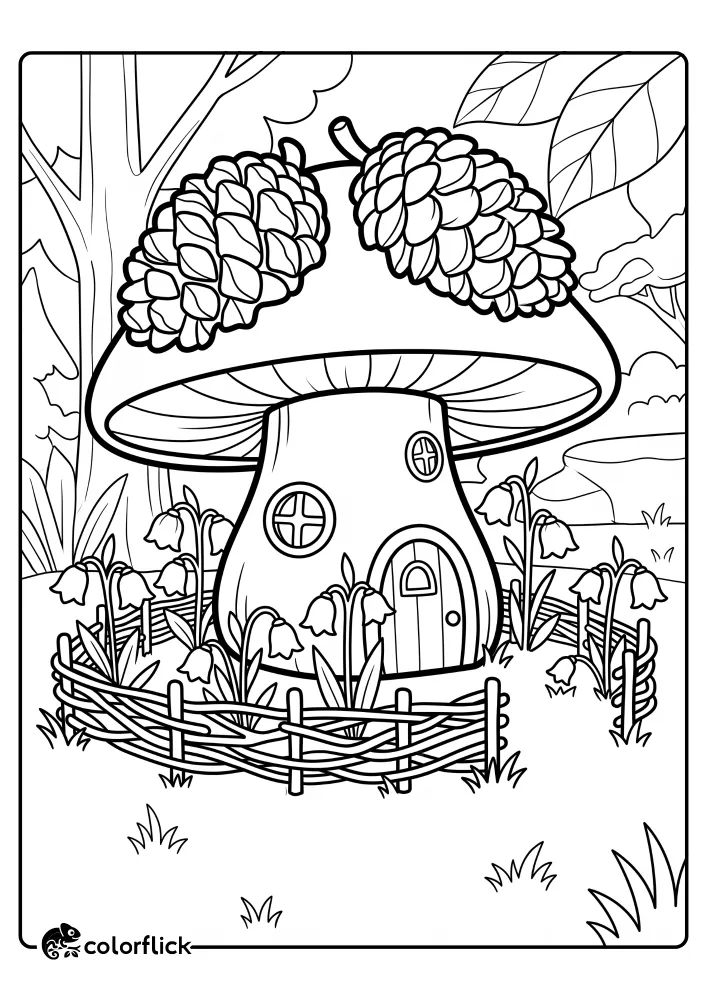
Nobody’s ever seen a real fairy house, but forests are full of the shapes that inspire them: hollow trunks, mushroom caps, tiny nooks tucked into roots. These imaginary homes ask kids to blend real observation with pure invention. Who lives there? What’s the roof made of? Every answer builds narrative thinking. Old folklore ties fairies to mushroom circles, which is exactly why a mushroom-shaped cottage feels so at home in a magical woodland scene.
Layers Upon Layers of Woodland Life
Forests stack up. Floor, understory, canopy — each layer holds different light, different life, different rules for what can grow or live there. That structure translates beautifully to a coloring page: distant elements lighter, closer ones darker, depth built through simple shading choices. Kids start absorbing visual hierarchy without a single lecture. The canopy can feel like its own separate world floating above a dim, quiet floor below.
Vines and Leaves Filling Every Gap
Nothing in a forest stays empty for long. Vines climb toward light, leaves stack and overlap, ferns fill every gap between bigger shapes. Some plants even grow harmlessly on others, borrowing space without stealing nutrients. For young colorers, repeating leaf and vine shapes are perfect for building controlled, patterned strokes. It’s also a gentle reminder that a forest isn’t just trees — it’s hundreds of smaller plants working together.
Myth vs. Fact: What’s Really Growing in the Woods
Common belief: Mushrooms in a magical forest scene are just decoration, a pretty shape tucked near a tree.
Reality: Real forest fungi are essential decomposers. They break down dead wood and leaves, returning nutrients to the soil so new growth can begin. That “decorative” mushroom is doing serious ecological work.
A Forest Scavenger Hunt Right on the Page
Turn coloring time into a game. Ask your child to find and count every hidden mushroom scattered through the scene, then circle each glowing firefly or tiny hidden creature they spot. It’s a simple twist that turns a quiet activity into an active hunt — sharpening focus while keeping the fun front and center.
A Woodland Waiting to Be Colored
Mystical forests hold layers, light, and life in every corner — and there’s a version of that magic waiting on every page in this collection. Whether your child is drawn to towering trees or tiny glowing fireflies, there’s a scene ready for them. Head back to the main gallery and let the adventure begin.