Imagine a shiny red beetle no bigger than a thumbnail, dotted in black, lifting its wings and taking flight from the tip of a leaf. That little wonder is waiting for your child’s crayons right below.
This is a living, growing gallery — bookmark it and come back, because new ladybug adventures land here all the time.
Spot the Magic: A World of Tiny Red Wings Ready to Color
There’s something almost mythical about a ladybug. That brilliant red shell isn’t just pretty — it’s a warning, a disguise, and a tiny suit of armor all at once. Did you know ladybugs aren’t always red? In the wild, you’ll find them in sunshine yellow, burnt orange, and even soft pink. Scientists have discovered over 5,000 ladybug species worldwide, and every single one wears its own unique pattern of spots, like a fingerprint no two bugs share.
The word antennae comes from a Latin word for “sail yard” — those delicate, bendy feelers on a ladybug’s head help it smell, taste, and touch the world before it ever takes a step. And those iconic spots? They’re not just decoration. They’re a clever trick called a warning signal, telling hungry birds, “I taste terrible — move along.”
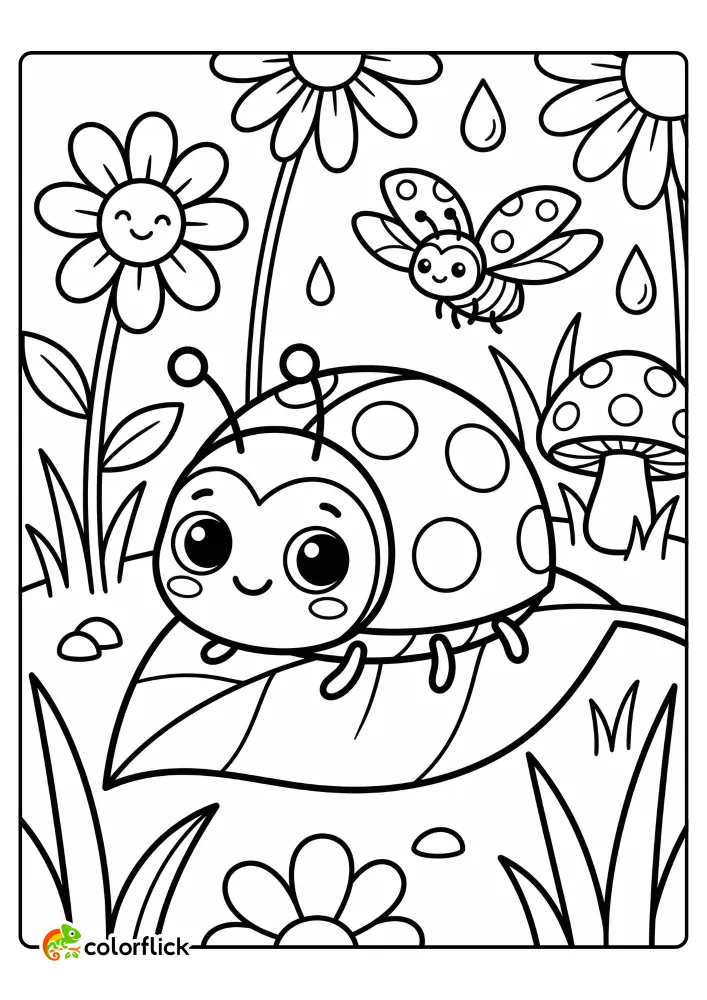
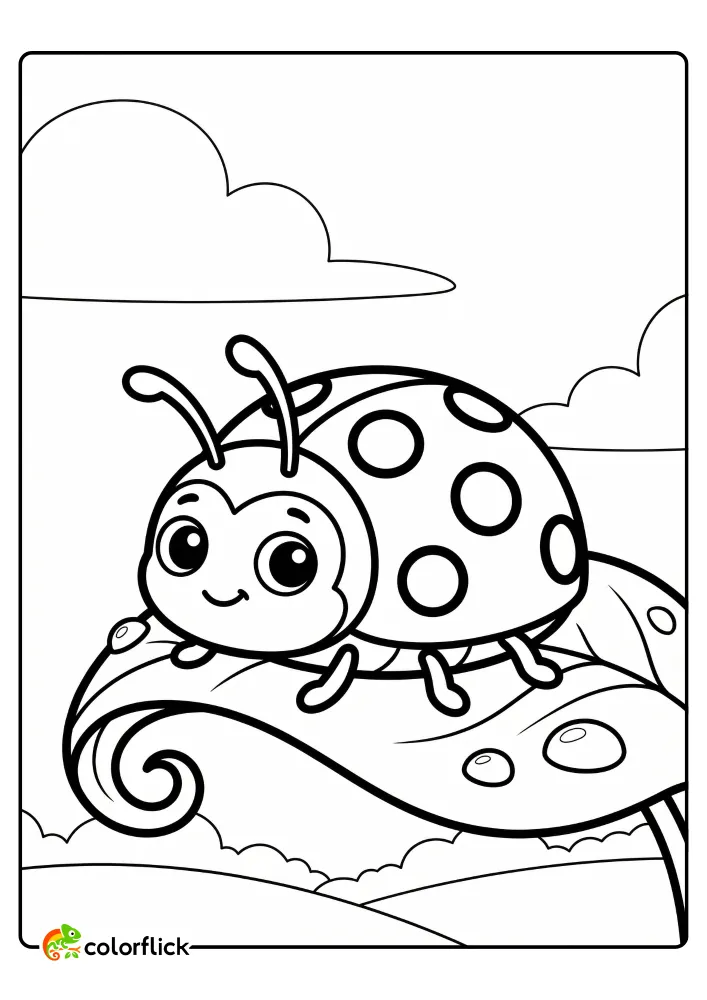
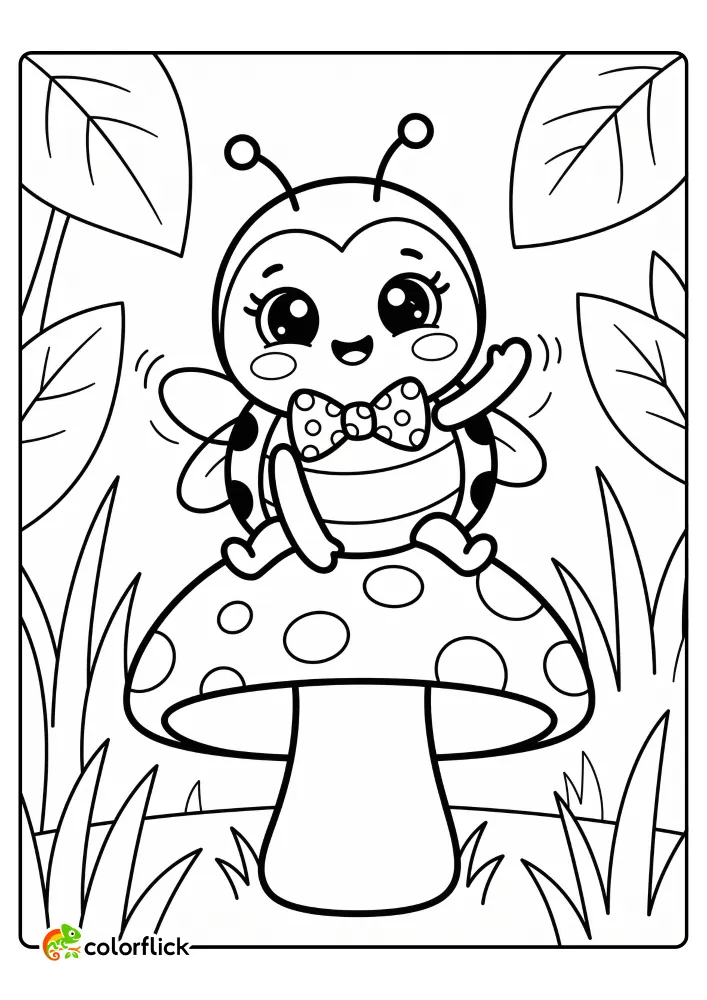
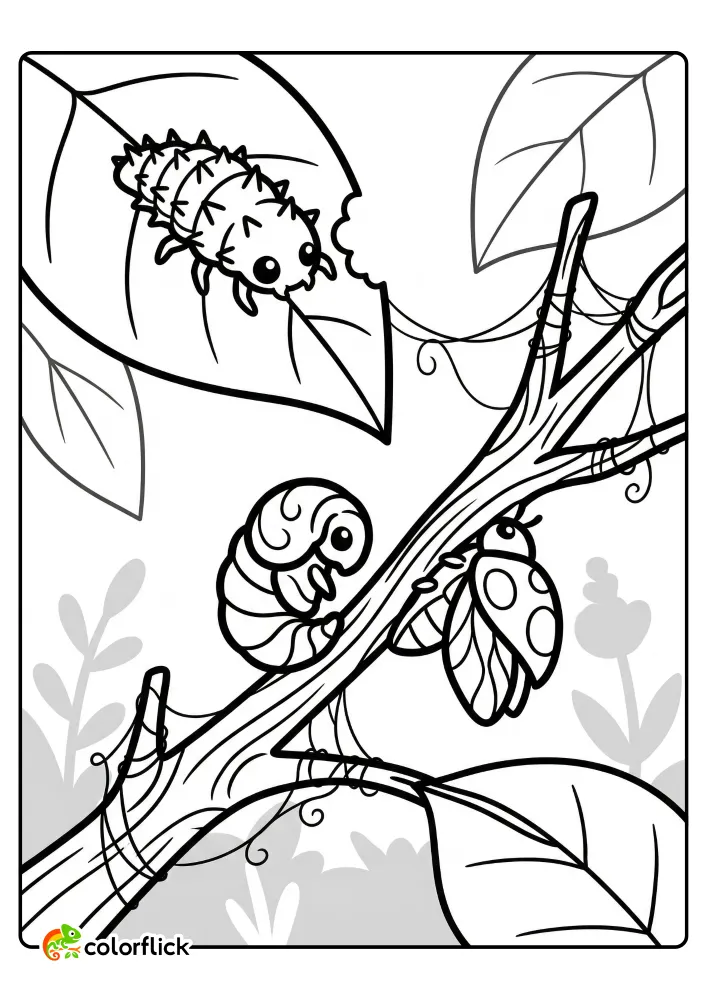
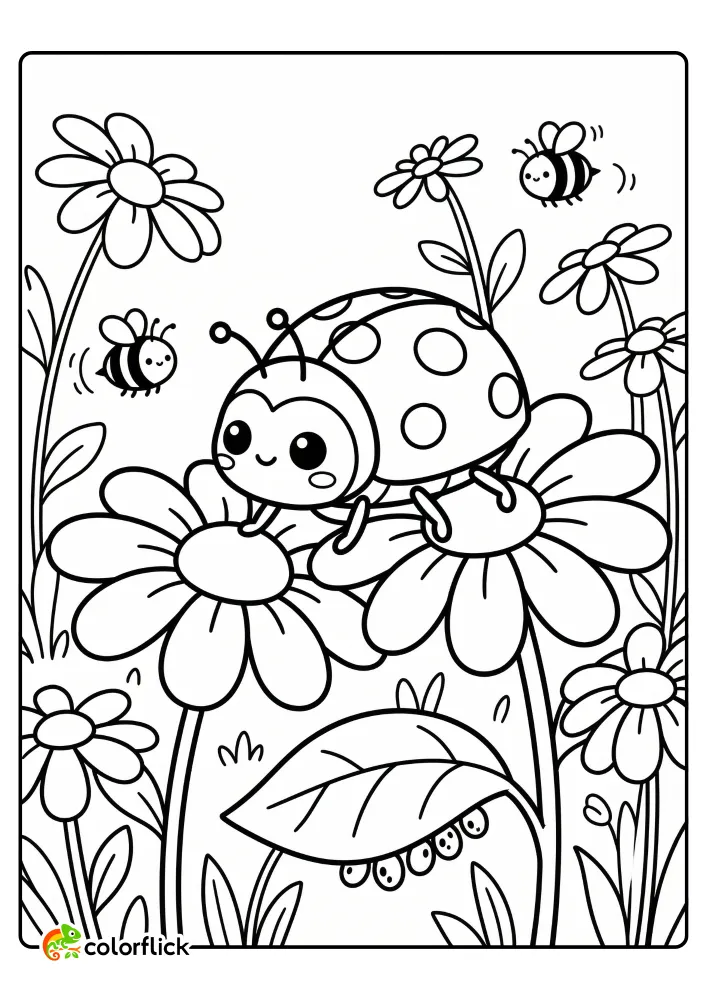
Here in this garden, you’ll meet a realistic ladybug perched on a dewy leaf, a cartoon friend with the happiest eyes you’ve ever seen, a buzzing garden full of daisies and hidden eggs, and a tiny larva — the wiggly, alligator-like baby stage — curled beside its pupa, the cozy transformation wrap where the magic of metamorphosis happens. A habitat is a creature’s home with everything it needs to eat, grow, and thrive, and a ladybug’s favorite one looks exactly like the sunny garden scene you’re about to color.
From Leaf to Sky: The Incredible Secret Life of a Ladybug
Long before a ladybug ever flashed that famous red shell, it was something completely unrecognizable — a dark, spiky creature that scientists call a larva. If your child saw one on a leaf, they’d probably back away. It looks like a tiny alligator, bristled and strange. But inside that hungry little body, something extraordinary is building. In just two weeks, the larva wraps itself into a pupa, a snug, golden casing where one of nature’s most dramatic transformations quietly unfolds. Out comes the ladybug.
And once that ladybug emerges? It becomes one of the garden’s most powerful allies. A single ladybug can eat up to 5,000 aphids in its lifetime — those are the tiny pests that feast on roses and vegetable plants. Farmers love ladybugs for exactly this reason, making them nature’s own pest control. When a ladybug pollinates a flower, it carries pollen dust from bloom to bloom, helping seeds form and gardens grow thick and full.
The next time your child colors the garden scene or the lifecycle page, they’re not just filling in shapes. They’re tracing the story of one of earth’s most beloved insects. In many cultures across Asia, Europe, and the Americas, spotting a ladybug is considered a sign of good luck. A group of them even has the most charming collective name in the animal kingdom: a loveliness of ladybugs. That’s not a coincidence. These tiny creatures have been charming humans for centuries — and now it’s your child’s turn to give them color.
Turn This Coloring Page Into a Whole Afternoon of Ladybug Fun
Once the crayons go down, the fun doesn’t have to stop. Here’s a simple craft that uses nothing but scraps you already have at home. Cut out your child’s colored ladybug, glue it onto a slice of cardboard tube sitting on a green paper leaf, press a button on for the head, and stick a small magnet strip to the back. That little garden friend goes straight to the fridge — a tiny, handmade reminder that your child made something real and beautiful.
While you’re crafting, let the conversation wander. Ask your child: If you were a ladybug, what color would you want your spots to be? Or try: How do you think a ladybug knows which flower to land on? These open-ended sparks aren’t just fun — they build vocabulary, encourage imaginative thinking, and deepen the science concepts your child just colored their way through.
One more thing worth knowing: not all sheets in this collection are the same level of challenge, and that’s very much intentional. The bold cartoon ladybug with the big eyes is a perfect starting point for toddlers aged two to four, with thick outlines that little hands can grip and fill easily. The lifecycle scene — with its larva, pupa, and emerging wings — is designed for ages five and up, ready to spark real science conversations about change, growth, and transformation. Pick the page that fits the moment, and let the coloring do the teaching.
Print, Color, and Come Back for More
Every page in this collection is yours to download and print as many times as you like — for classrooms, kitchen tables, rainy afternoons, and nature units. Grab the ones your child loves most today, and remember to bookmark this page. New sheets are added regularly, so the loveliness keeps growing.