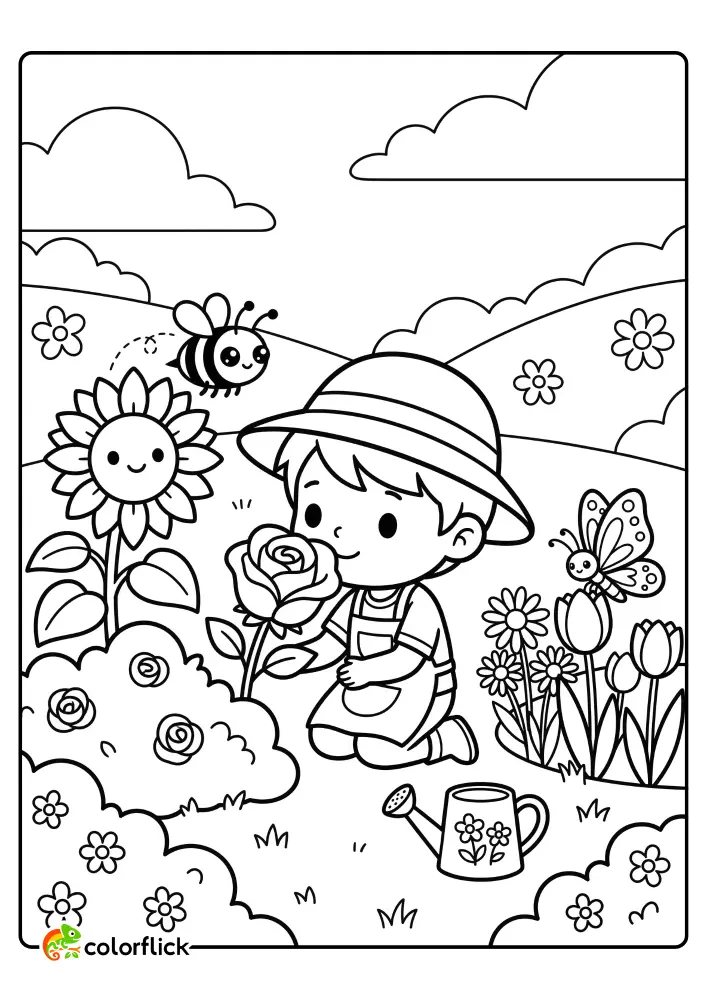
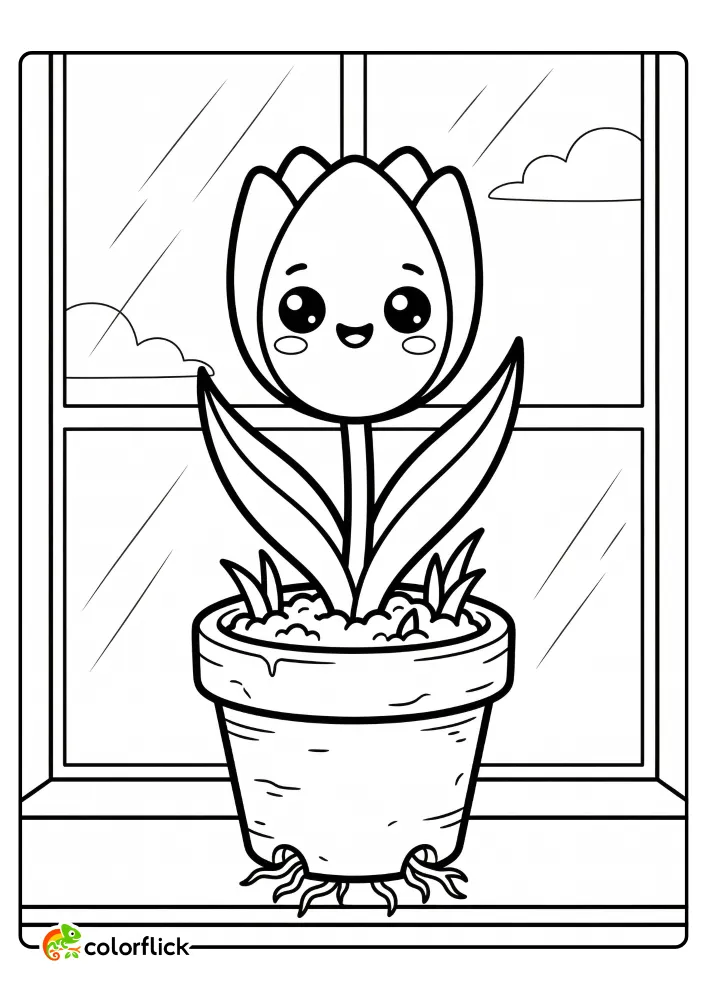
Spring just arrived — and it brought the most gorgeous petals with it. Grab your favorite colors and let’s fill these tulips with every shade of the rainbow.
This is a growing gallery, so bookmark this page and come back often — new tulip designs bloom here all the time!
Step Into the Garden: Color the World’s Most Beloved Bloom
There is something almost magical about a tulip. It starts as a humble little bulb — an underground storage “baby plant” that sleeps quietly through the cold winter months, waiting. Then, when the warmth returns, something extraordinary happens. A slender green shoot pushes through the soil, stretching taller and taller (some tulips grow up to 2 feet tall — taller than many kids!) until finally, those gorgeous cupped petals unfurl toward the light.
Each petal — the soft, colorful leaf-like part of the flower — works hard beyond just looking pretty. It attracts pollinators like bees, guiding them inward toward the stamen, the flower’s pollen-holding center. And here’s a wonder: tulip petals actually shift color in sunlight, like nature’s own mood ring.
The tulips we know today are cultivars — special varieties that humans carefully bred over centuries for extraordinary colors and shapes. Some have smooth edges, some are fringed with ruffled, lacy tips like the hem of a fancy dress. Others are hybrids, two different tulip types crossed together to create something entirely new and spectacular.
From single blooms to sweeping fields to cozy pots on a sunny windowsill, every coloring page below is a tiny doorway into one of the world’s most beloved flowers.
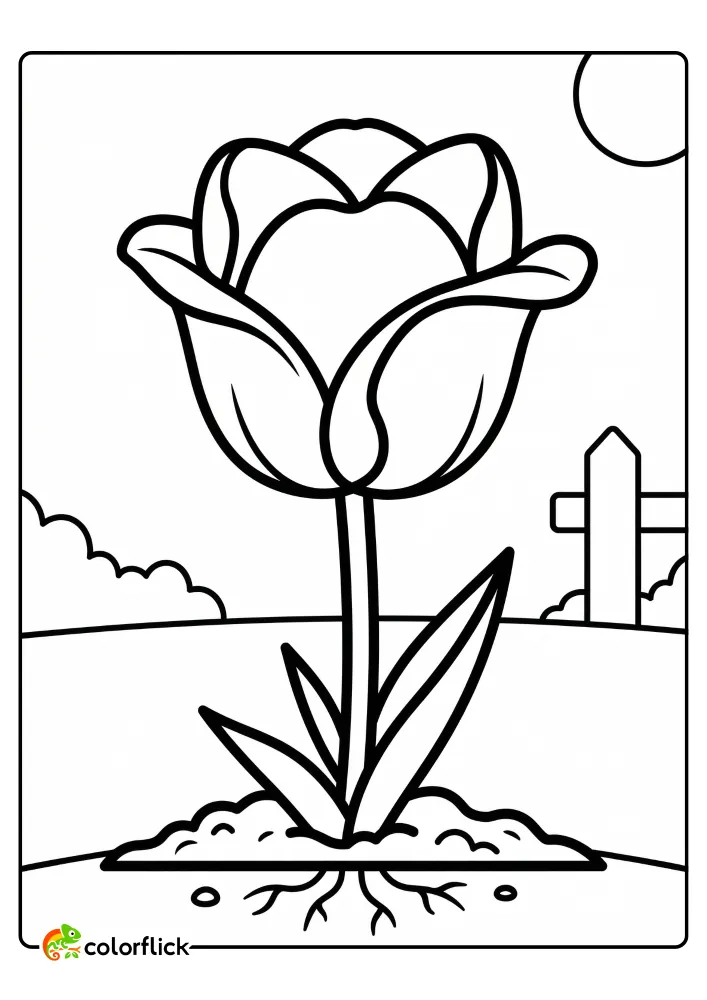
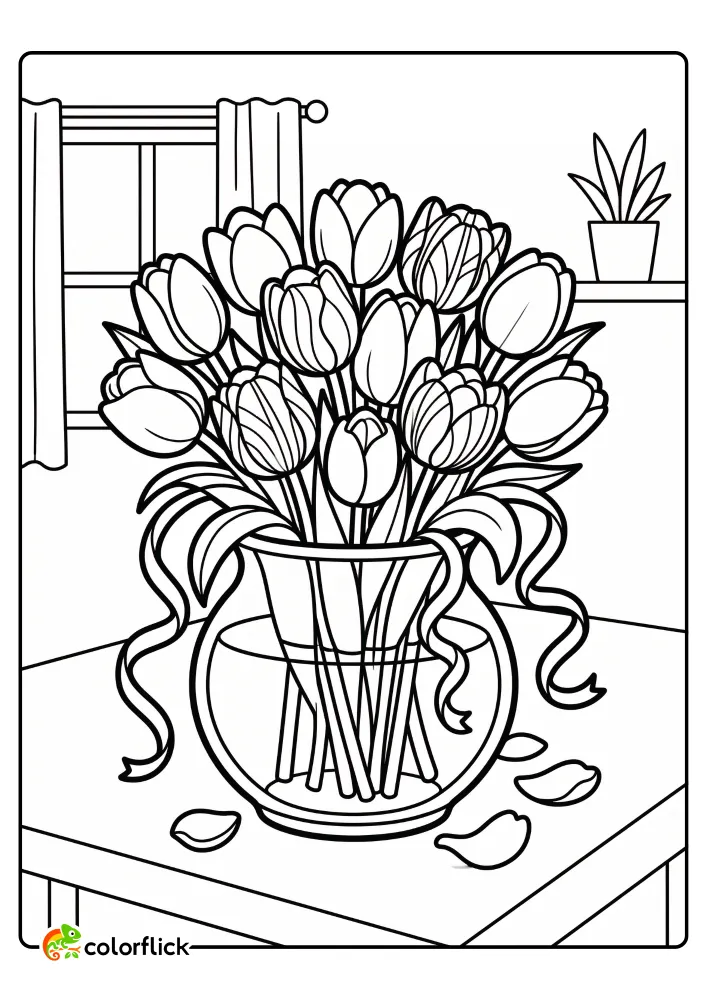
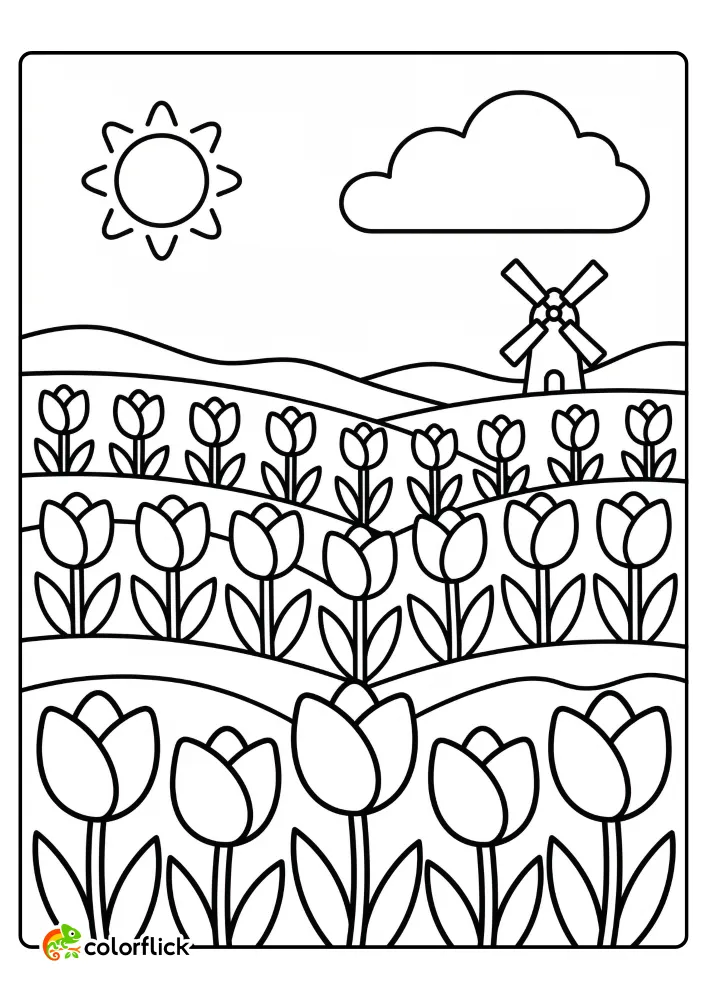
From Turkish Mountains to Your Coloring Table: The Surprising Story of the Tulip
Here is something that surprises almost everyone: tulips are not Dutch. The myth is completely understandable — the Netherlands is famous for its breathtaking tulip fields, and the country grows over 3 billion tulips every year, enough to circle the entire Earth. But the true origin story begins somewhere else entirely.
Tulips first grew wild in the mountain meadows of Central Asia and Turkey. They traveled to Europe along the ancient Silk Road trading routes, arriving in Holland in the 1500s where Dutch growers fell so deeply in love with them that “Tulip Mania” erupted — a period when rare tulip bulbs were literally worth more than gold, traded on exchanges like precious jewels. The word “tulip” itself traces back to the Turkish word for turban, because of the flower’s distinctive cupped shape.
In the language of flowers — a tradition with centuries of history — the tulip symbolizes perfect love. Giving someone a bouquet of tulips is one of the oldest romantic gestures in the world.
Photosynthesis is quietly happening in every green leaf in these scenes, the process by which plants convert sunlight into food — like a built-in kitchen running on pure sunshine. Underground, rhizomes (underground stems) help tulips spread year after year, like plant magic spreading beneath the soil. Some tulips even open wide in the morning sun and close their petals each night for protection, as if tucking themselves in for sleep.
Coloring these pages isn’t just fun — it’s a little window into one of history’s most fascinating flowers.
Turn Your Tulip Pages Into a Whole Spring Adventure
Once the coloring is done, the fun doesn’t have to end at the table. Here’s a simple, delightful project that turns a finished page into something your child can actually grow from: the Tulip Pencil Topper Planter. Cut out a colored tulip, glue it to the top of an empty toilet paper roll (poke a few small holes in the bottom for drainage), fill it with a little soil, drop in some seeds, and set it on a sunny windowsill. Your child’s artwork becomes a living garden — and watching real green shoots emerge from their own handmade pot is genuinely thrilling for kids at any age.
While they’re coloring or tending their little planter, these conversation starters can spark some wonderful moments together. Ask them: “What color would make your tulip glow like magic — and what emotion does that color show?” Or try: “If tulips could talk, what story would this field tell about spring?” These aren’t trick questions — they’re open doors into creativity, emotional vocabulary, and imagination that children of any age will run right through.
For toddlers just learning to grip crayons, the bold outlines of these pages are perfect for scribbling and exploration. For older kids ready for a challenge, the petal details and background elements offer real shading practice that builds fine motor skills and artistic confidence.
Download, Print, and Let the Colors Bloom
Every tulip page in this collection is completely free — just print and color. Whether you’re tucking one into a busy afternoon or building a whole spring unit around flowers, these pages are ready whenever you are.
Check back soon — this garden is always growing, and there are many more tulips on the way.