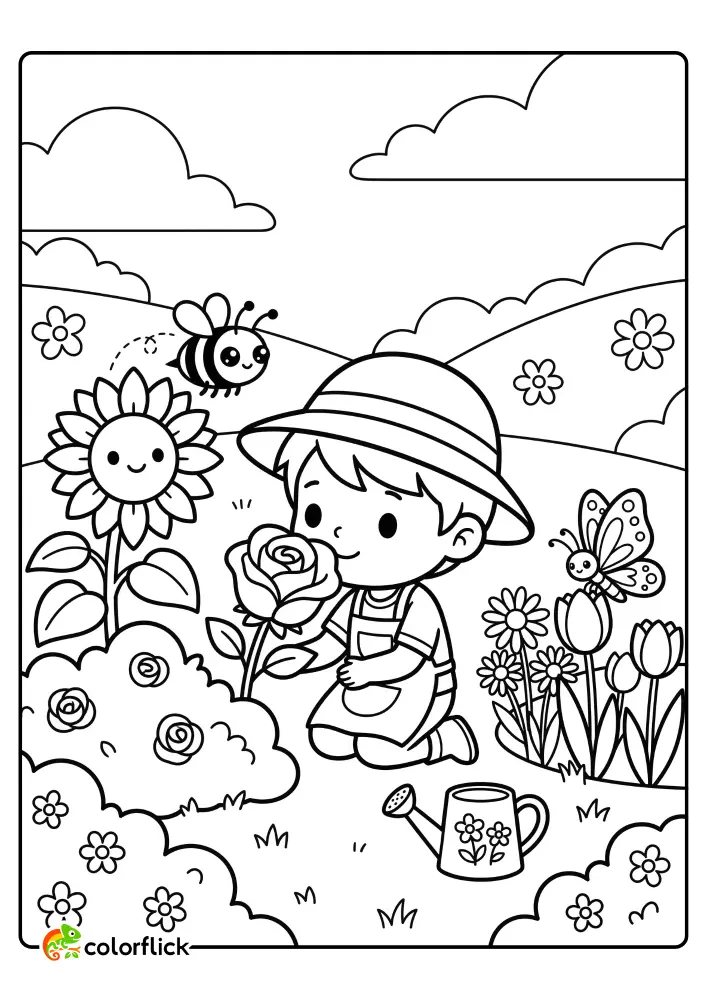
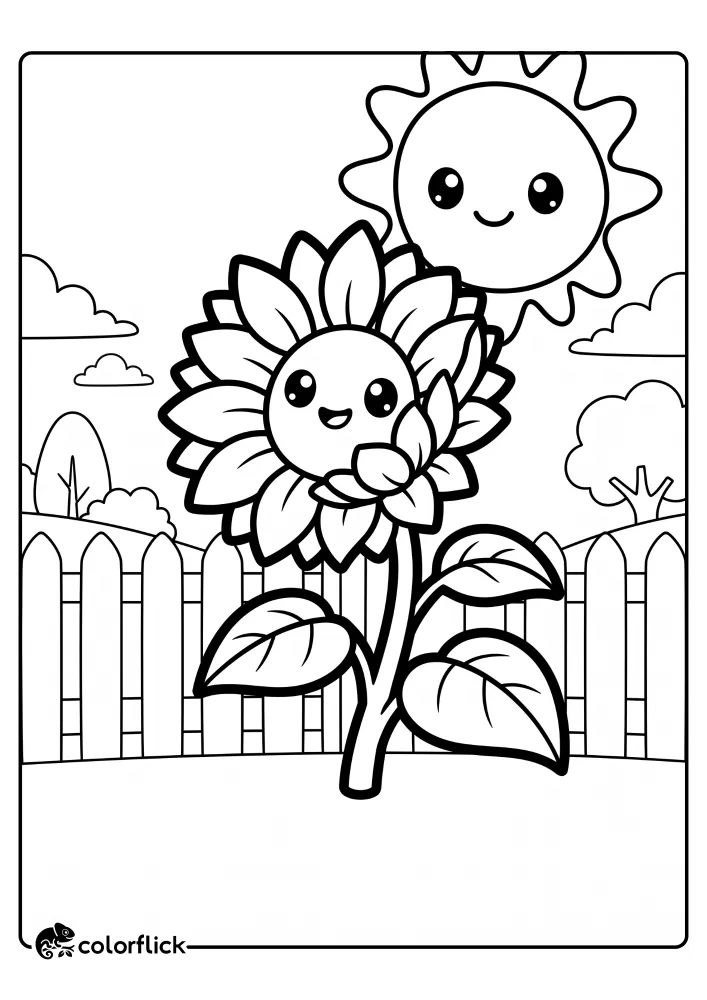
Sunflowers turn their heads. Sunflowers grow taller than grown adults. Sunflowers hide math inside their petals. Kids notice none of this until they start coloring one.
That’s the magic here. A simple page with a big yellow bloom becomes a doorway into botany, counting, patterns, and art history — all while your child just thinks they’re having fun with crayons. Fine motor skills sharpen. Focus builds. Curiosity gets fed. Grab a page, grab some markers, and watch a five-minute activity do a lot more than fill time.
Ready to Grow Your Own Sunflower Collection?
We’ve gathered a full field of sunflower designs, from big simple blooms for little hands to detailed spiral patterns for older kids who love a challenge. Every page is free, print-ready, and waiting for color.
What Is a Sunflower, Really?
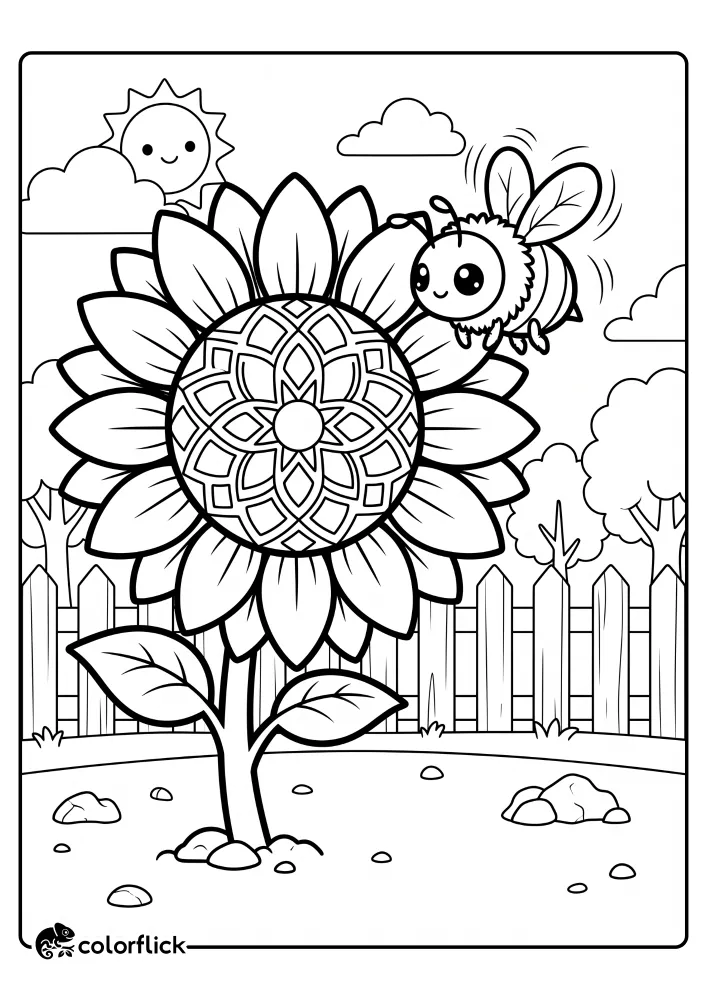
That giant yellow “face” isn’t one flower. It’s hundreds. Tiny blooms called florets pack together — a ring of petal-like ray florets on the outside, a dense disk of florets in the center. Bees spot the display easily, land, and get to work.
For a kid with a crayon, this means two totally different coloring jobs on one page: broad, sweeping strokes for the petals, then careful, patient dabs for the center. That shift trains visual discrimination fast — big shapes versus fine detail, all on the same flower.
From Seed to Sky-High Stem
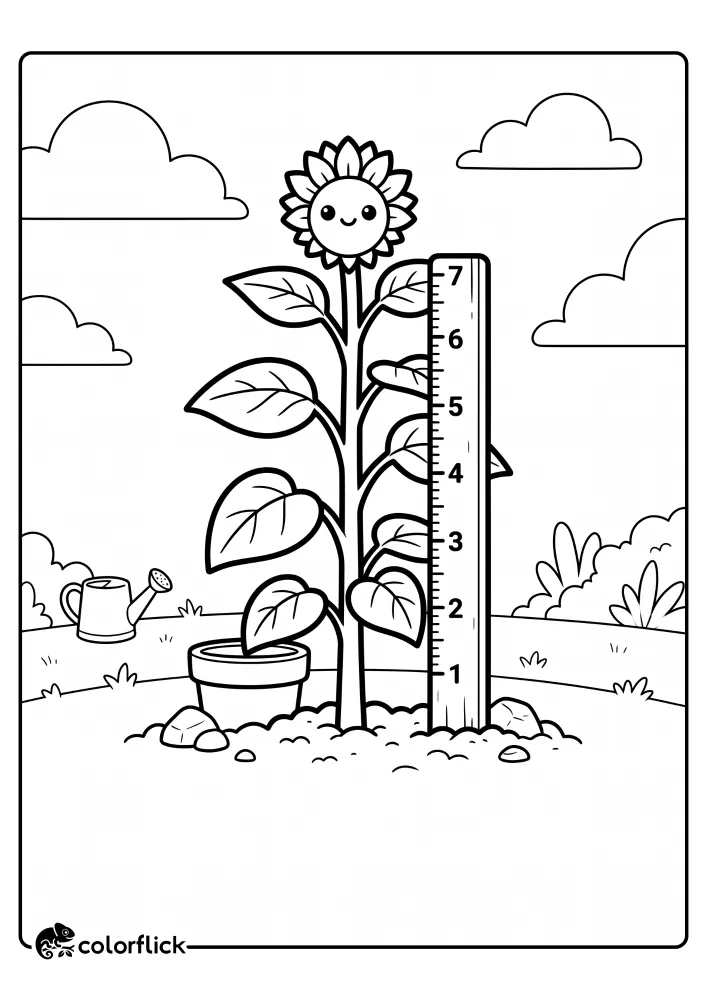
A sunflower doesn’t take its time. Given good sun and soil, it can shoot up 8 to 12 feet in about six months. Roots dig deep first, anchoring the plant before that thick, sturdy stem starts climbing. The leaves are broad, slightly rough, heavy in the hand if you could touch them.
Coloring the whole plant — roots to bloom — turns into a sequencing exercise without your child even noticing. Root, stem, leaf, flower. Cause and effect, drawn in green and yellow.
More Than Pretty: Seeds That Feed the World
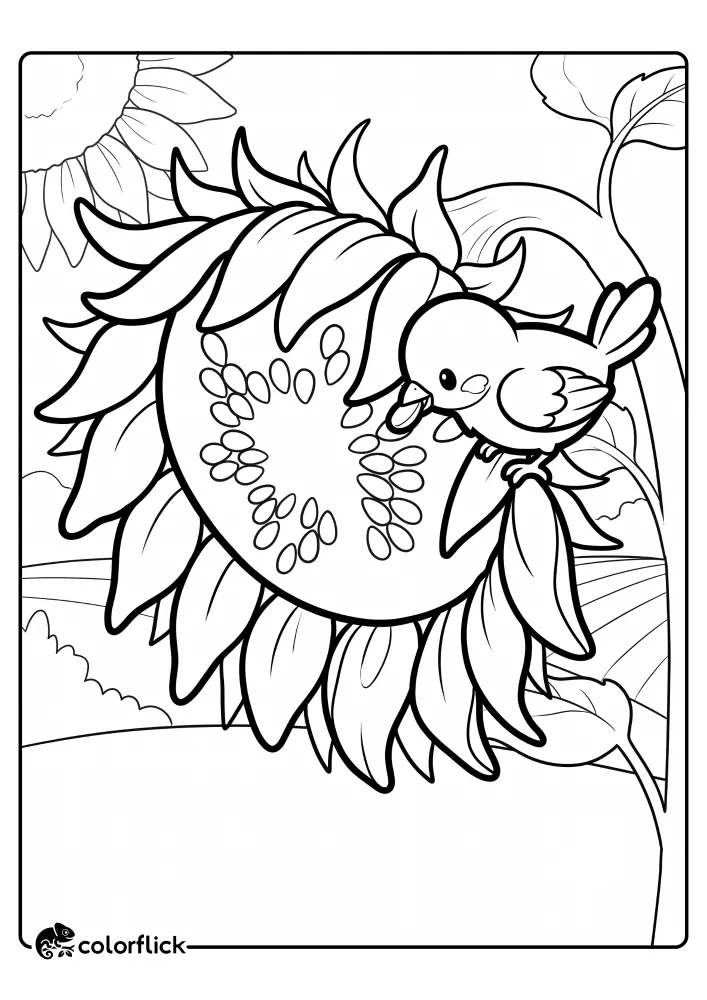
Every floret in that center can become a seed. Black seeds get pressed into cooking oil. Striped ones get snacked on, or ground into sunbutter for sandwiches. Birds line up at feeders for the same tiny seeds, all year round.
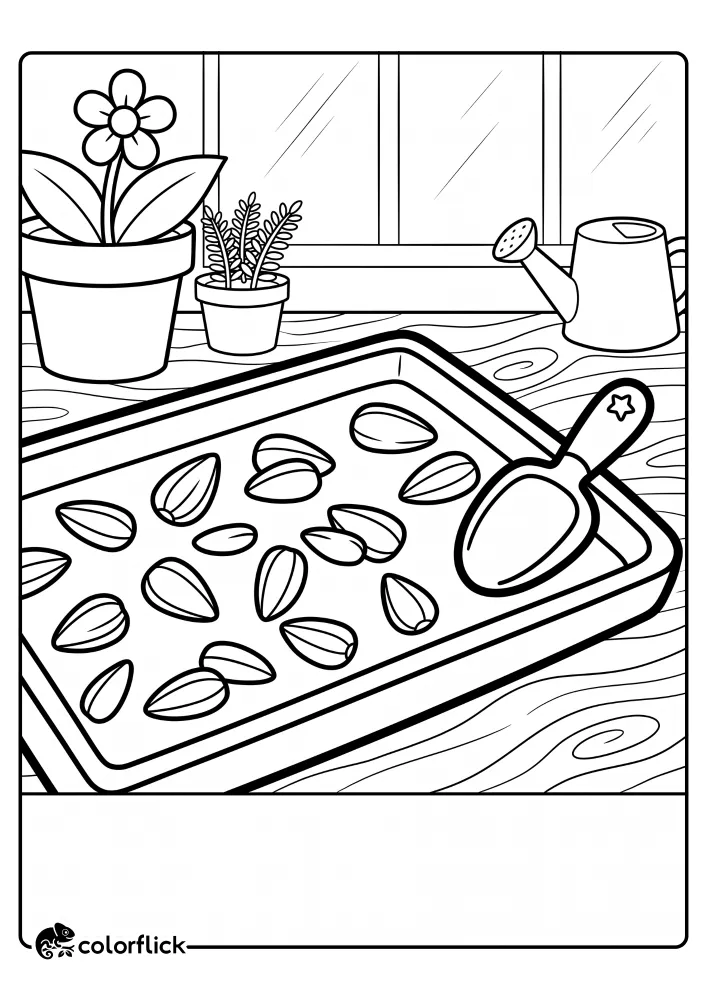
Ask a child to color a panel of seeds — some striped, some solid — and watch them start sorting without instruction. Pattern recognition. Categorization. Early math, hiding in a snack food.
The Secret Spiral Hidden in Every Bloom
Here’s the part most adults don’t know either. Those florets aren’t scattered randomly. They spiral outward at a precise angle — 137.5 degrees — creating two sets of interlocking spirals. Count them, and you’ll usually land on 34 in one direction, 55 in the other. Both Fibonacci numbers. Nature doing math nobody taught it.
Following those curved lines with a crayon takes real hand-eye coordination. Kids who stick with it are practicing sequencing and pattern-spotting, the same mental muscles used later for actual math problems.
A Flower Famous Enough to Paint
Vincent Van Gogh loved this flower so much he painted an entire series just called Sunflowers. Kansas claims it as a state flower. Ukraine calls it their national flower. Happiness, sunshine, warmth — that’s what a sunflower has meant to people for generations, across very different cultures.
Coloring a cultural sunflower image — a smiling face, an art-inspired bloom — gives kids a small entry point into a much bigger conversation. Why do people love this flower? That question alone builds language and empathy.
Myth vs. Fact: Do Sunflowers Really Chase the Sun?
Myth: Every sunflower head swings around all day long, tracking the sun from sunrise to sunset.
Fact: Only young buds actually do that — a behavior called heliotropism. Once a sunflower matures, its head locks into place, usually facing east. So the fully bloomed flower on your child’s coloring page? It’s not moving anywhere. It found its favorite direction and stayed.
Turn the Page Into a Sunflower Scavenger Hunt
Coloring finished doesn’t mean the activity’s over. Hand your child a magnifying glass — real or pretend — and turn them into a sunflower detective.
Have them find: every tiny seed in the center, counted in groups of five. The single longest leaf on the stem. A big spiral versus a small one, hiding in that swirling pattern they just colored.
Suddenly it’s a counting game. An observation game. A reason to look twice at something they thought they were done with.
How to Print Your Sunflower Coloring Pages
No complicated steps here. Every design in our collection is Free Printable, formatted A4 and US Letter Ready, and available through a quick, Easy PDF Download. Pick a page, hit print, hand over the crayons.
Let the Coloring Bloom
A sunflower page looks simple. It isn’t. Behind that yellow bloom sits math, biology, art history, and a whole afternoon of quiet, focused fun for your child. Head back to our gallery, pick a favorite design, and let the growing begin.