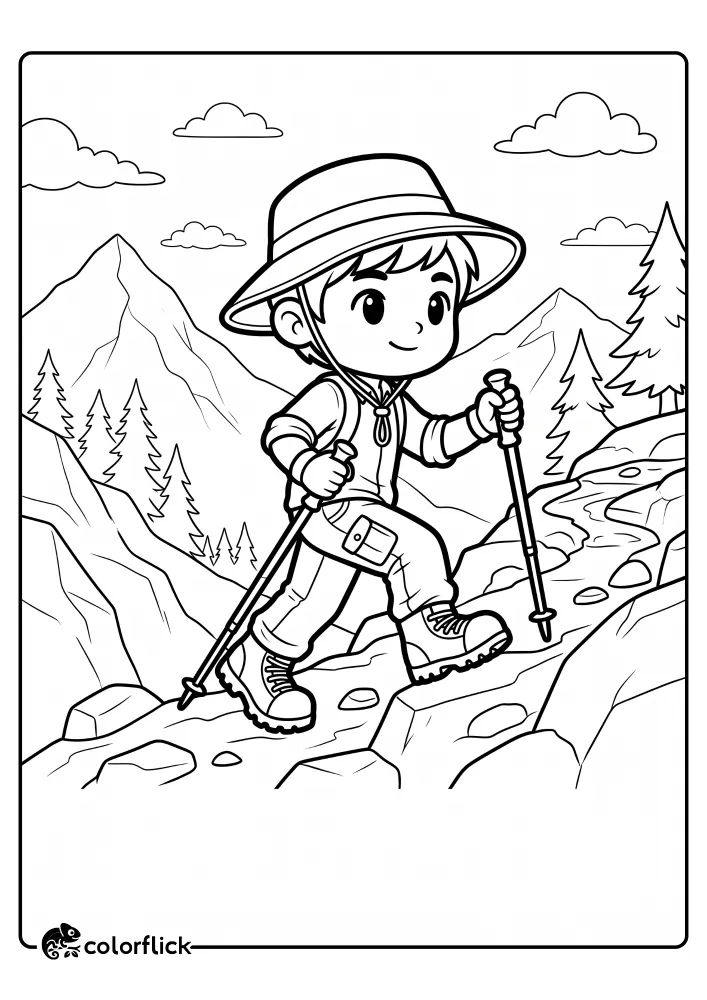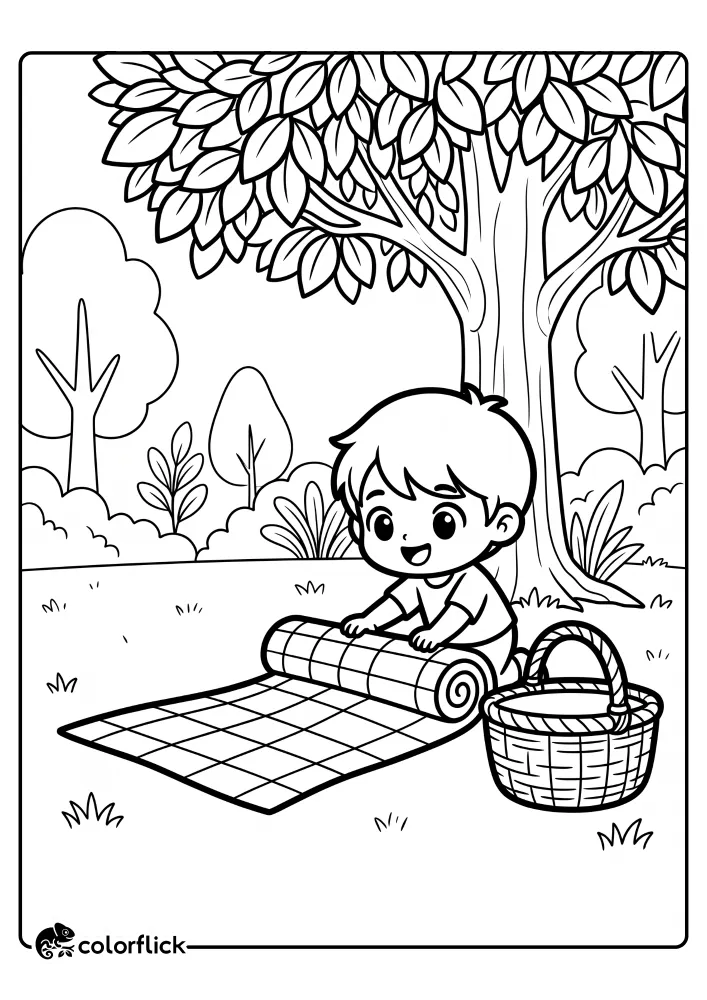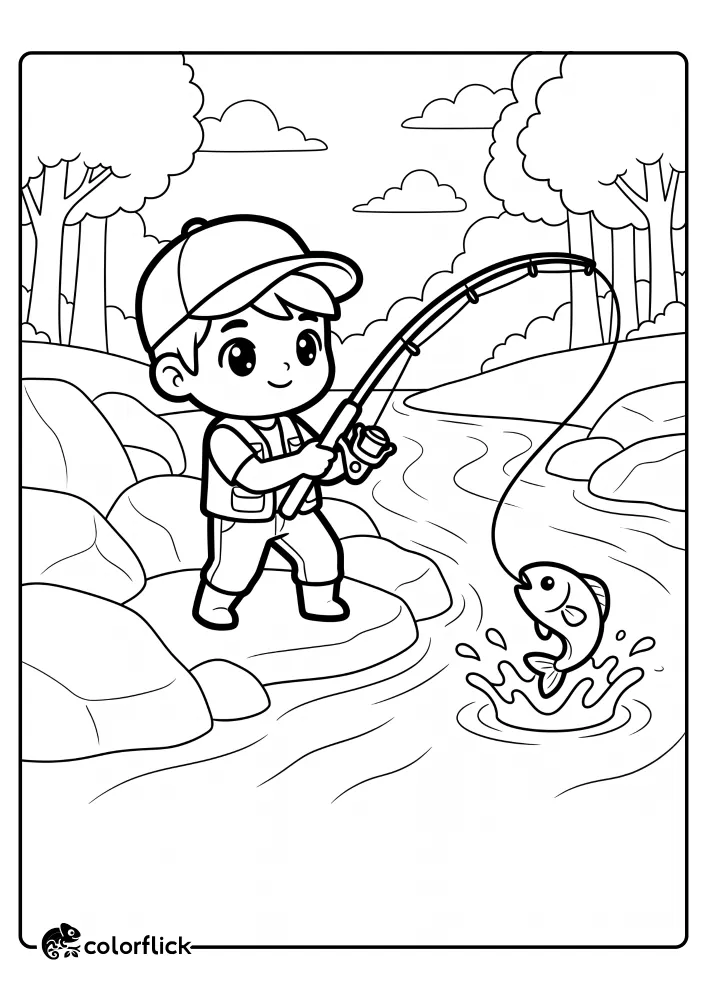
No campfire needed. No gear list required. Just a printed page, a box of crayons, and a child completely absorbed for the next 45 minutes.
Camping coloring pages build geometric thinking, fine motor control, and a genuine love for the natural world — all before anyone even leaves the house.
Download Your Free Camping Coloring Pages Collection
We’ve curated a gorgeous, ready-to-print set of camping coloring pages covering every corner of the campsite — tents, crackling fires, towering pines, wilderness gear, and the wild animals that call the forest home.
Every page is completely free. Print one or print them all.
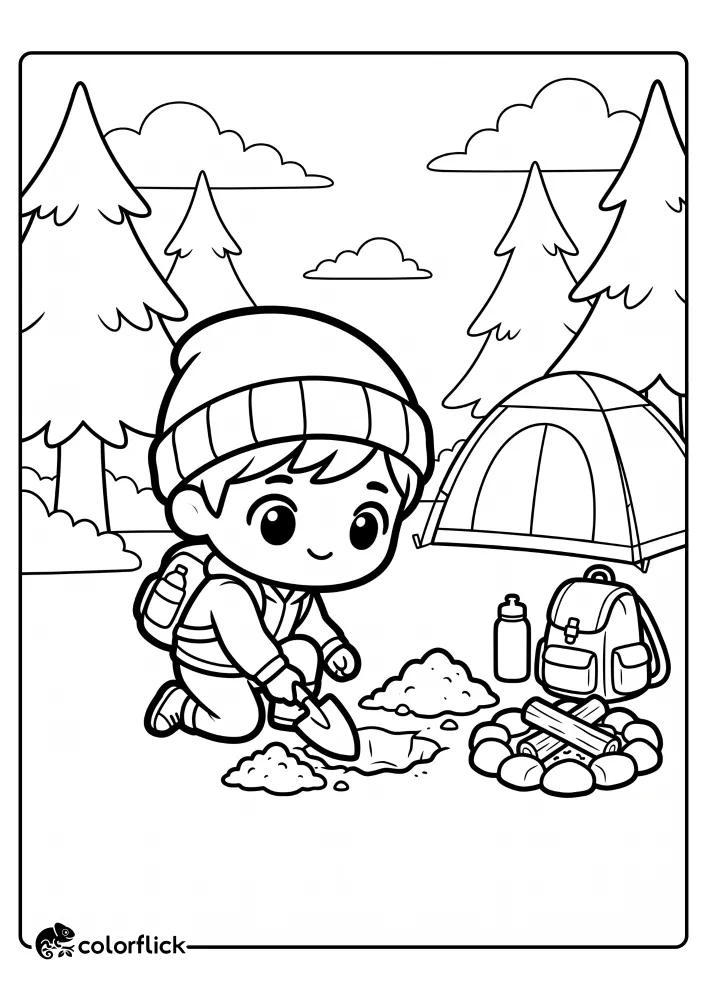
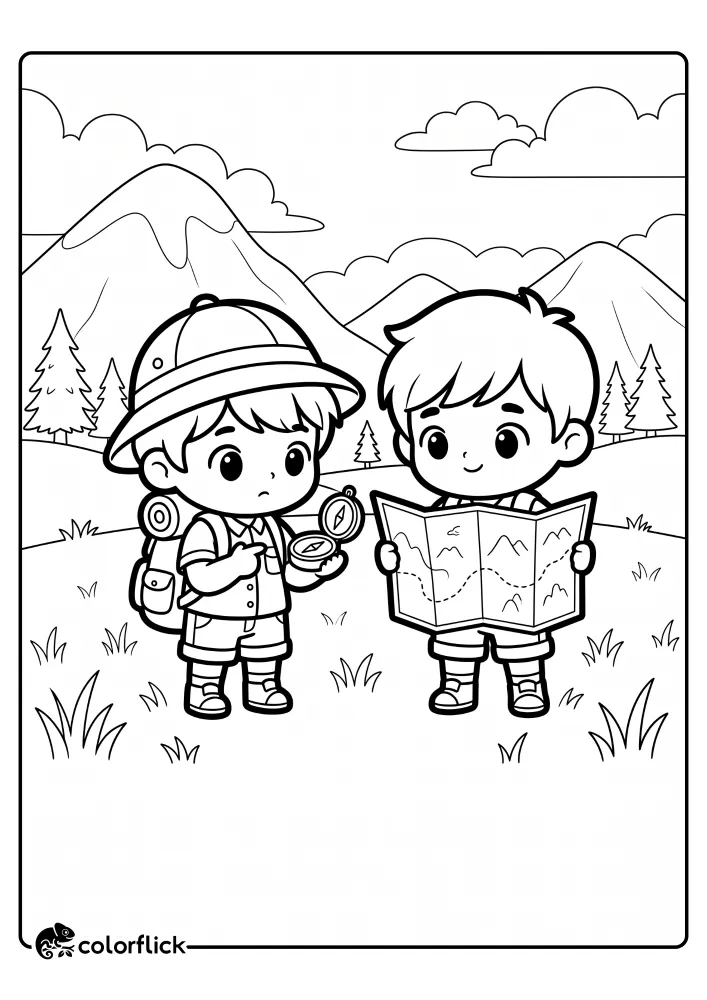
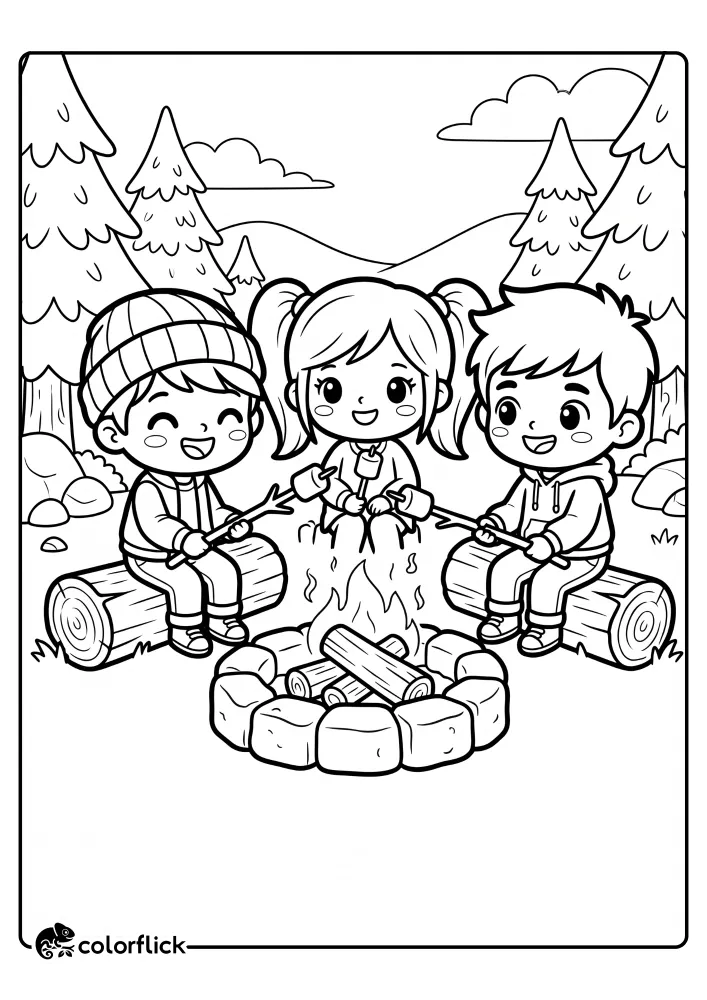
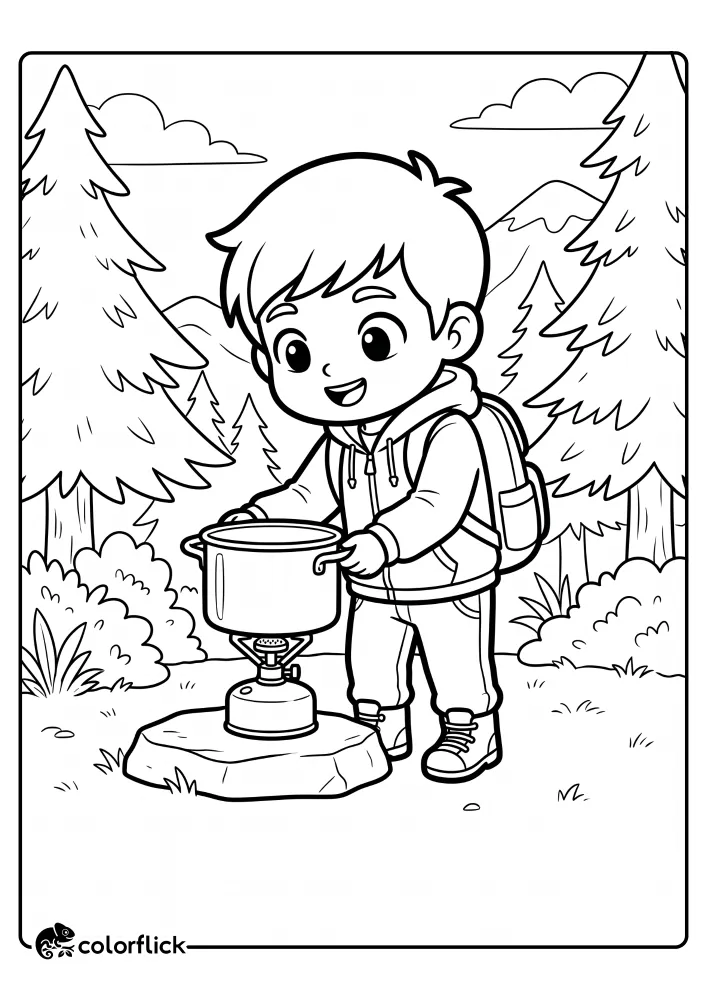
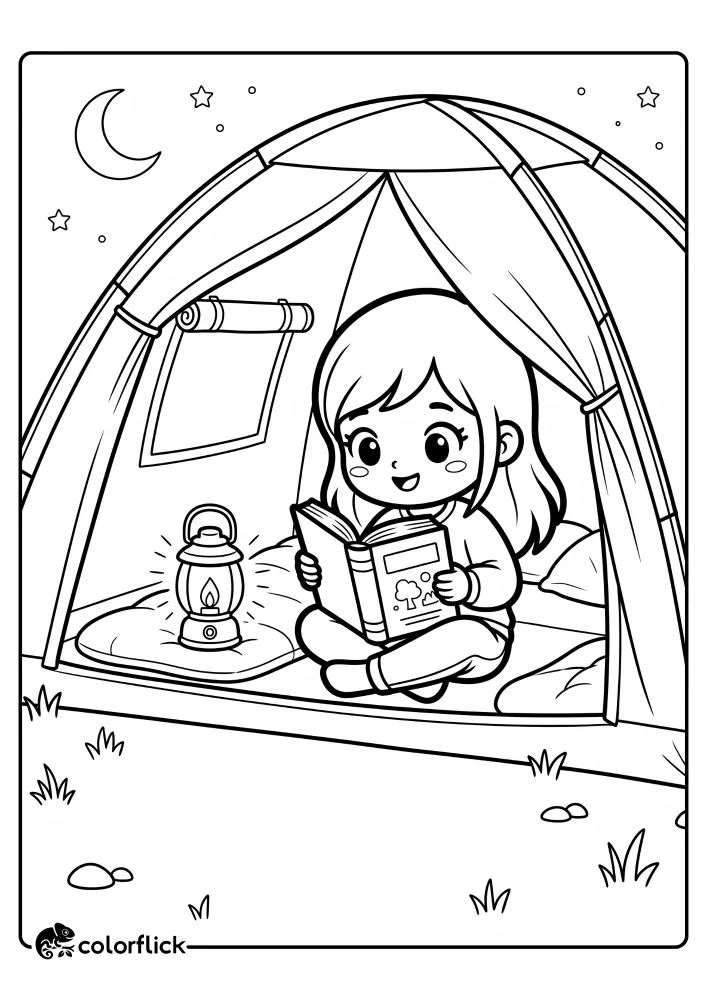
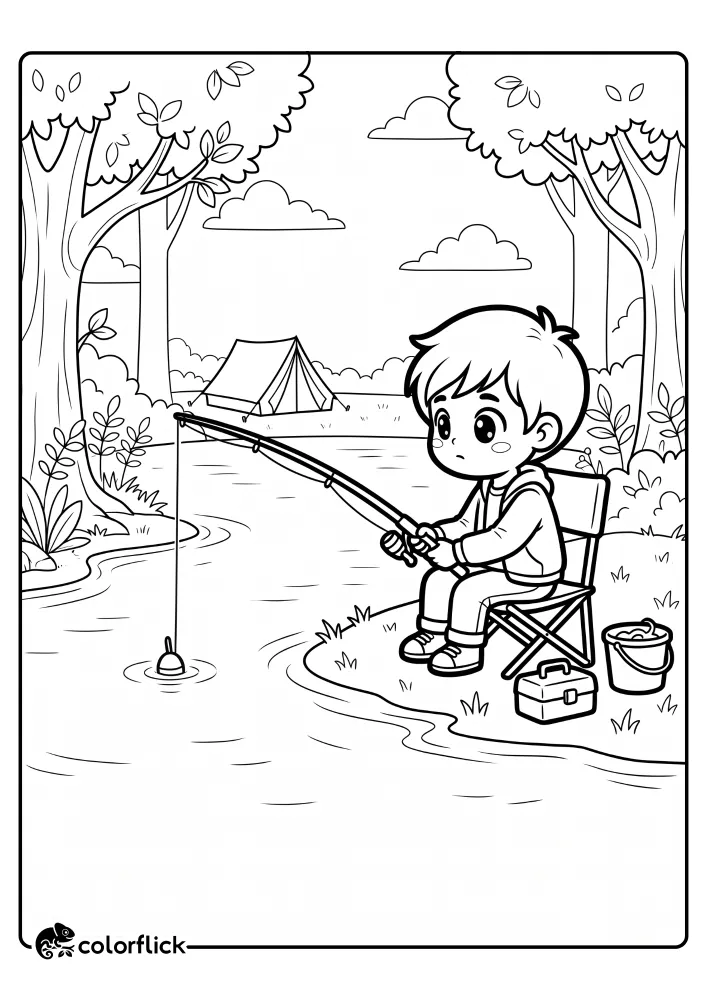
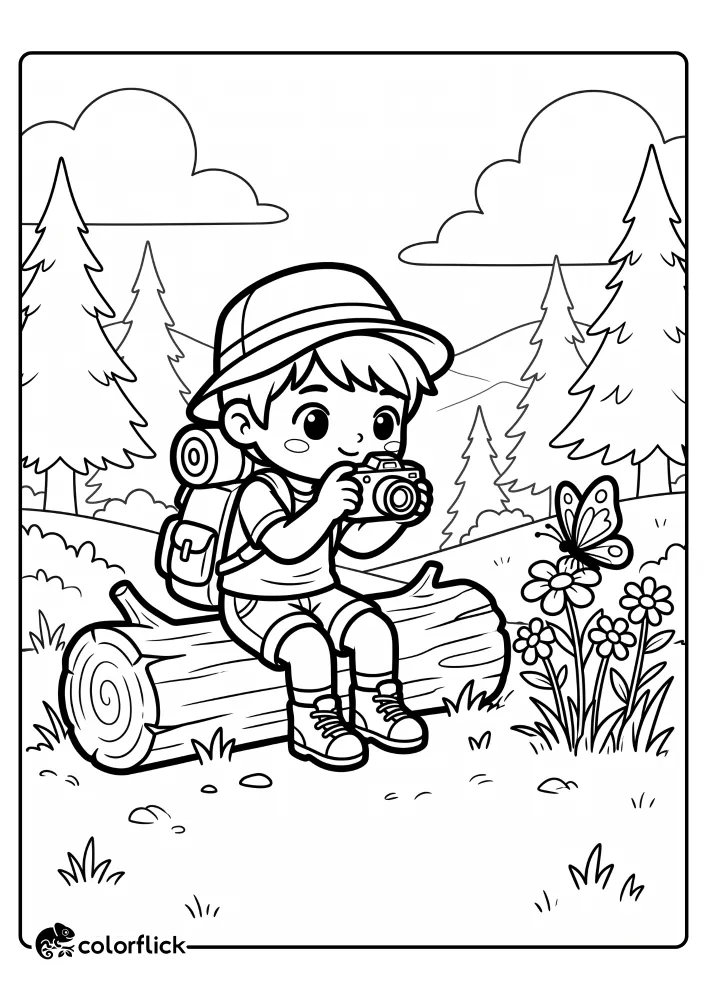
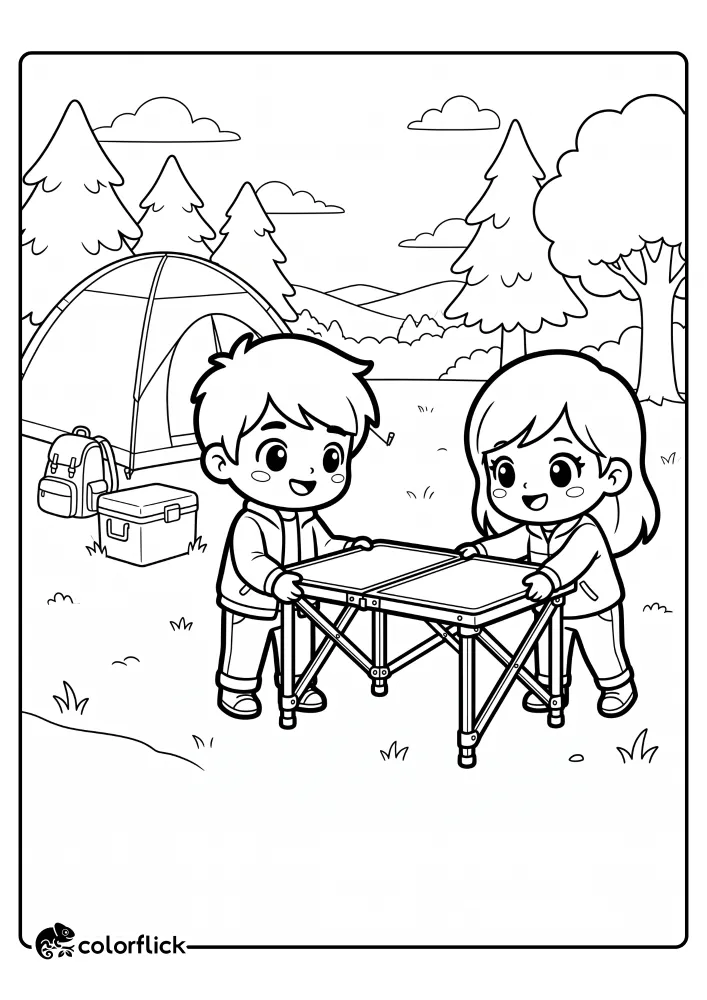
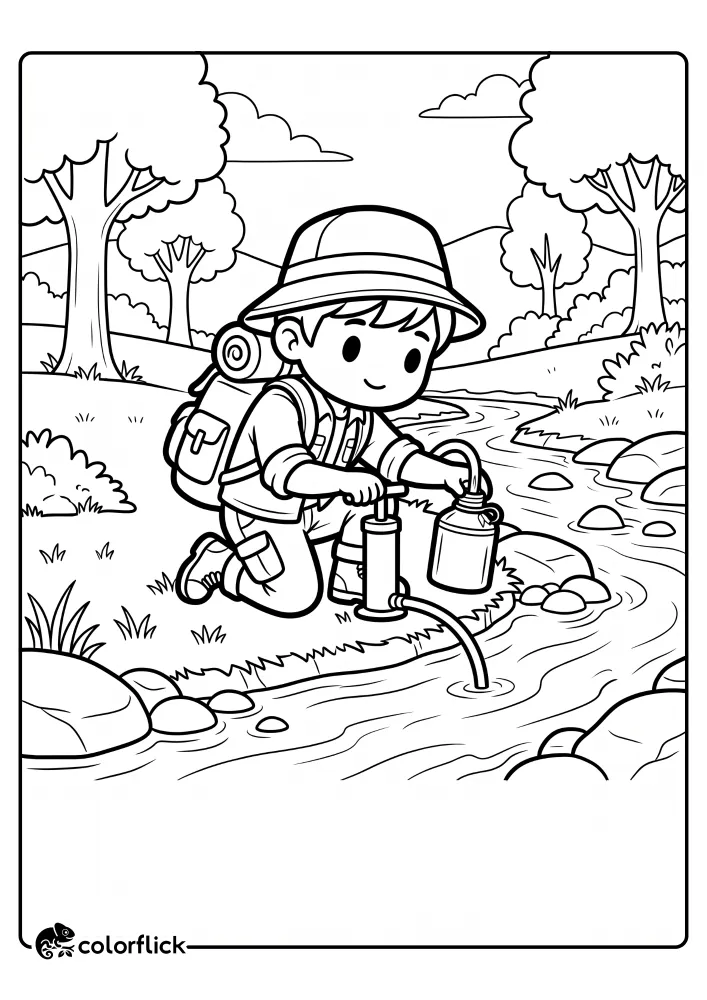
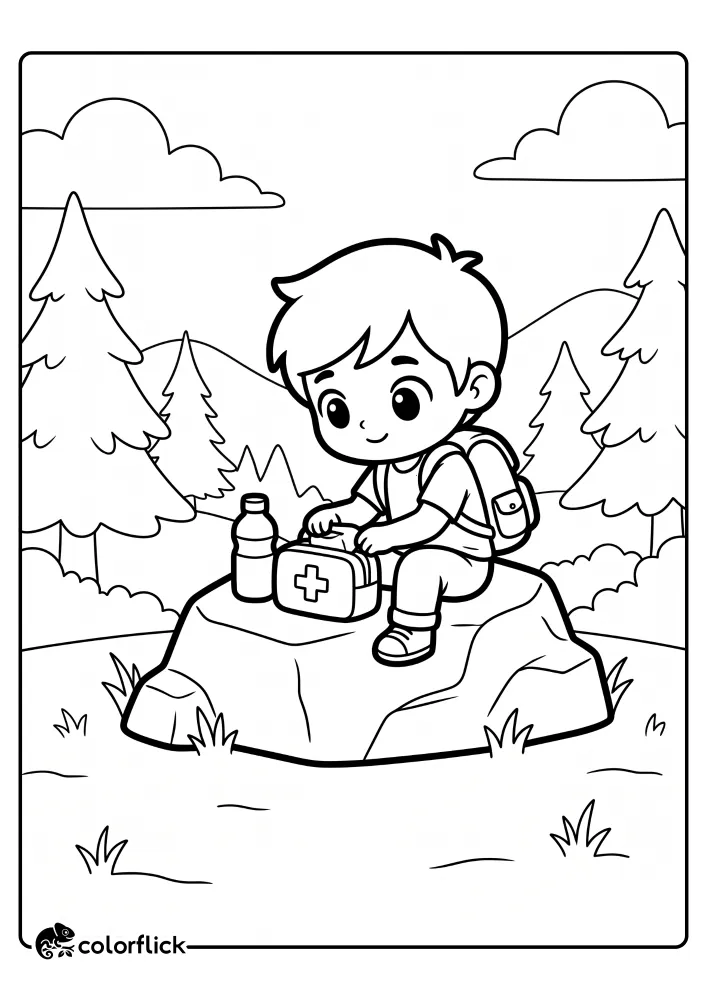
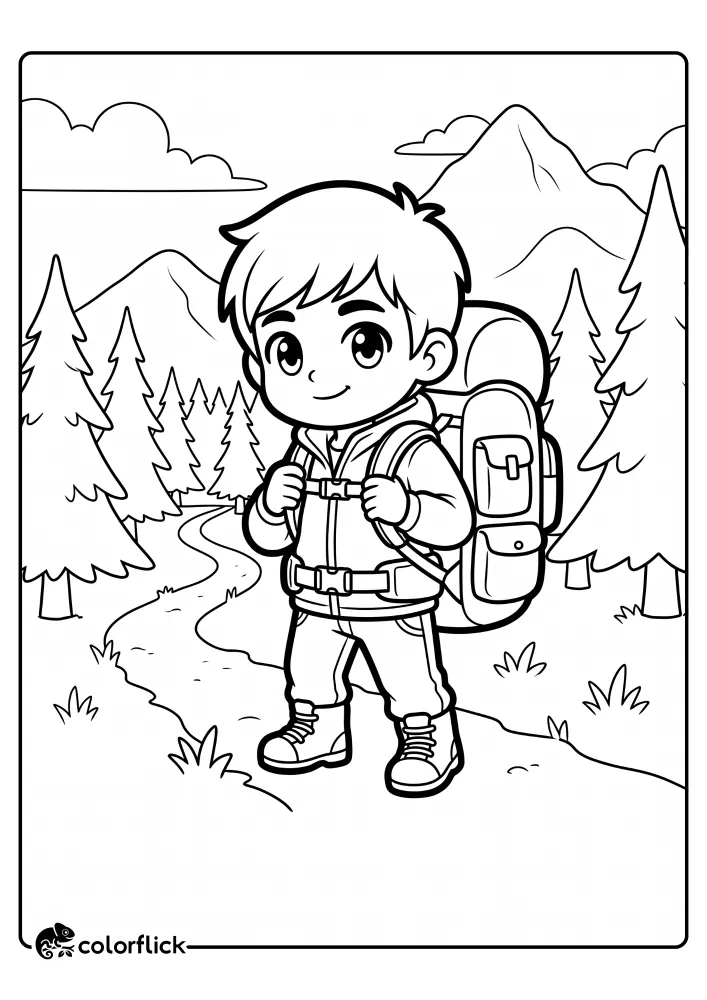
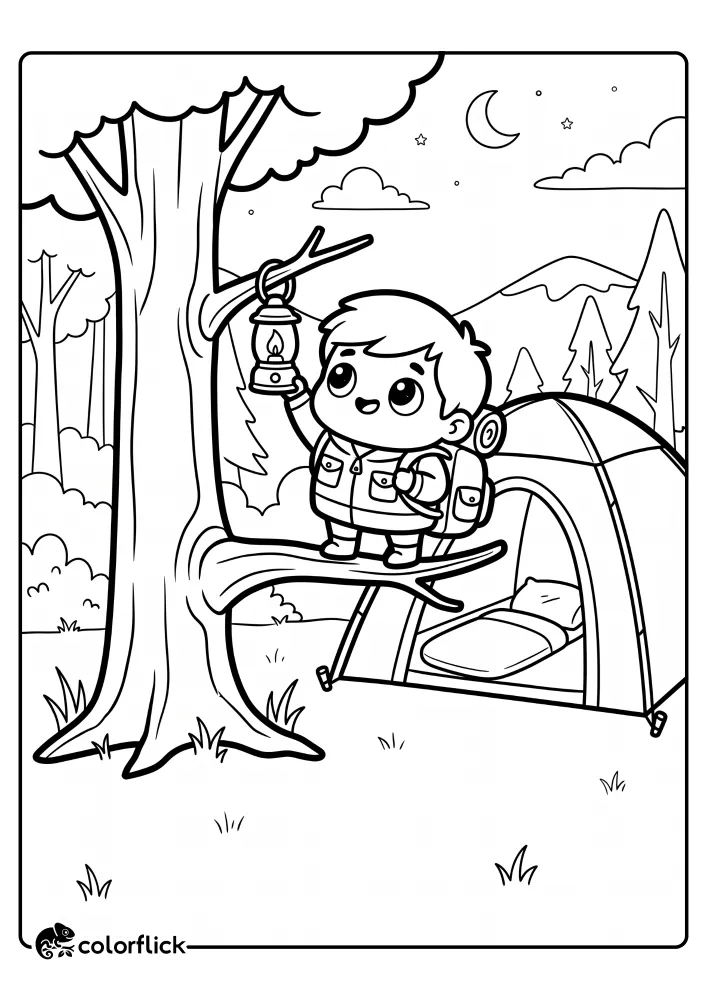
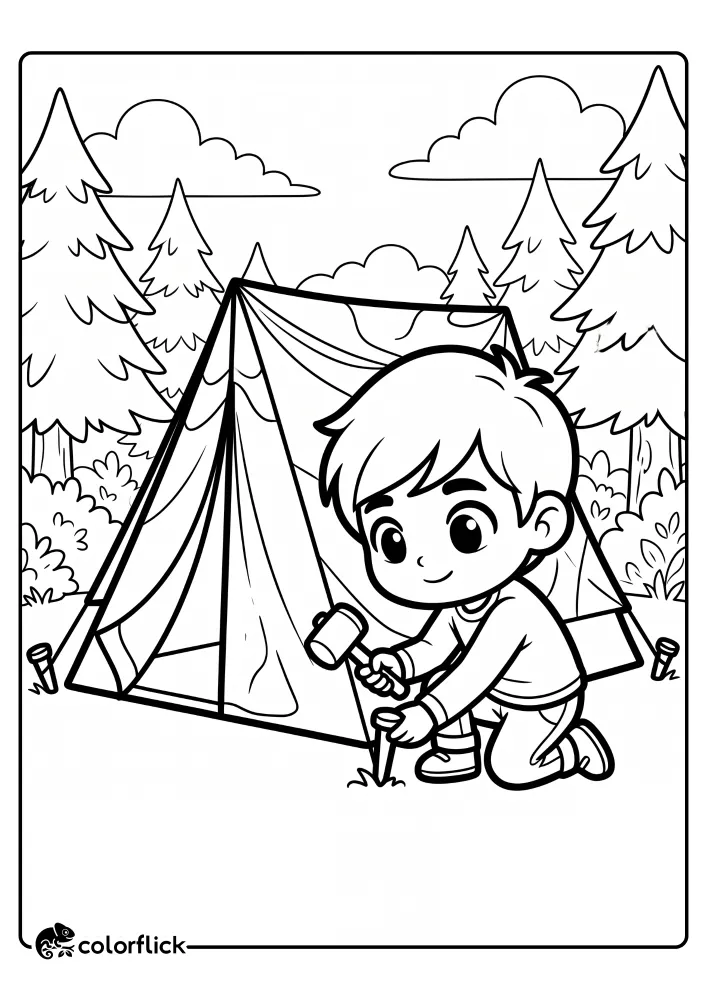
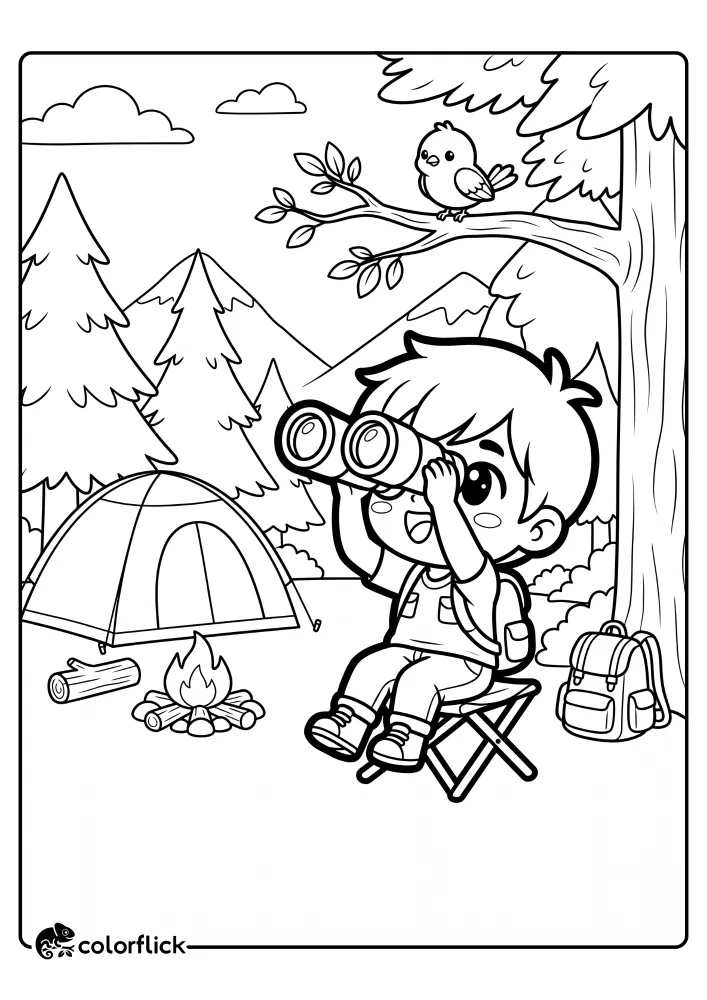
The Camping Tent: Shelter and Home in the Wild
That triangle shape isn’t just a tent. It’s one of humanity’s oldest ideas.
Prehistoric people built the first tent-like shelters around 40,000 BC — branches, animal skins, leaves. The modern camping tent we recognize today wasn’t patented until 1856, when U.S. Army officer Henry Hopkins Sibley drew inspiration directly from Native American teepees.
When a child colors a tent, they’re tracing geometry. Triangles. Rectangles. The concept of enclosure — a space that keeps the outside out. That’s early math. That’s spatial reasoning. Dressed up as a really fun afternoon.
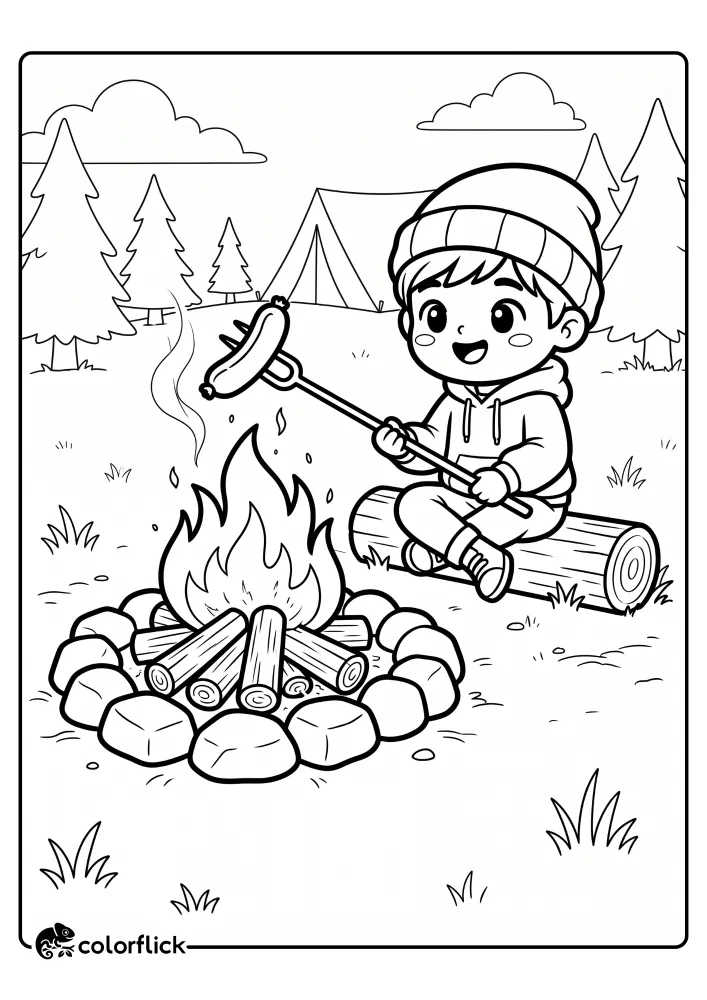
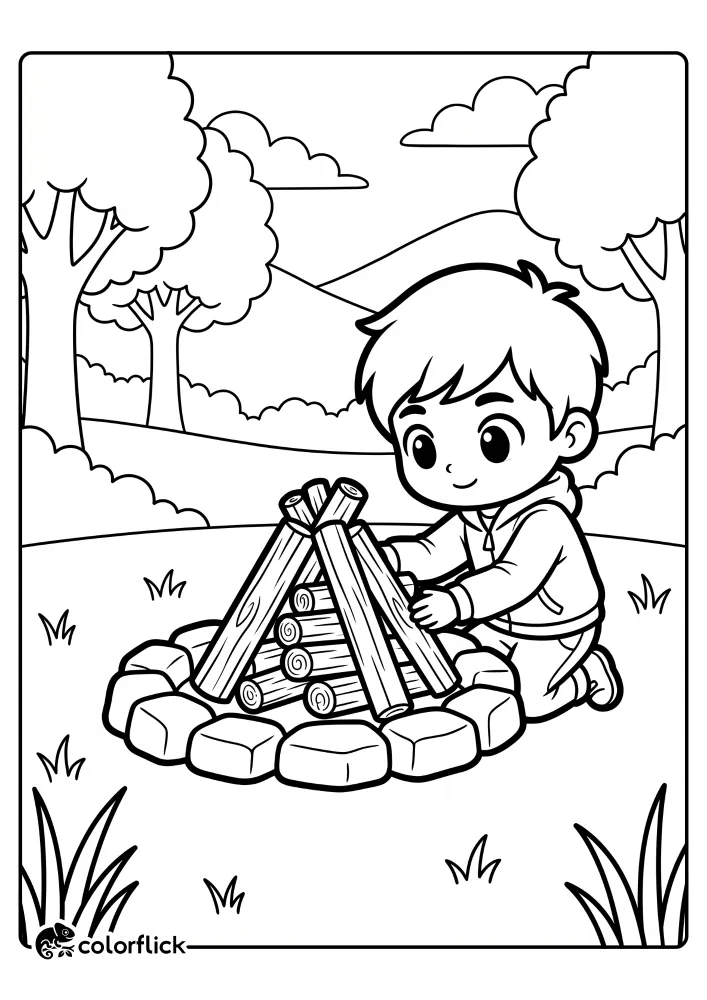
Campfire Core: Warmth, Cooking, and the Storytelling Circle
Here’s a number worth saying out loud: 1.9 million years.
That’s how far back humans go with cooking meat over fire, based on charred antelope bones found by archaeologists. Fire isn’t just cozy. It’s the foundation of human civilization.
A campfire reaches 900°F in just a few hours — hot enough to melt lead. The fire triangle (heat, oxygen, fuel) is real science hiding inside a beautiful orange glow.
Coloring those flames — the deep red at the base bleeding up into orange, then bright yellow at the tip — teaches children about color transitions and heat in the most hands-on way possible. Add the sensory layer: What sound does a campfire make? What does woodsmoke smell like? Ask it while they color. Watch them think.
Forest Trees and Nature: The Camping Landscape
One large tree. Four people’s worth of oxygen. For an entire day.
Pine trees, oaks, the full forest canopy — these aren’t just background scenery on a camping page. They are active, working ecosystems. They filter air. They store carbon. Their bark protects them like skin. Their canopy shelters hundreds of species underneath.
Coloring tree bark is deceptively challenging. The texture demands focus, careful small movements, staying inside irregular shapes. That’s fine motor development. That’s hand-eye coordination. Scientists call it observational drawing. Kids call it making the tree look really scratchy and cool.
Vocabulary to practice while coloring: pine, canopy, bark.
Camping Gear Essentials: Backpack, Lantern, and Canoe
The canoe has been solving wilderness travel problems for thousands of years. Native American tribes used them to navigate northern waterways — what we’d now call canoe camping — long before it became a recreational hobby in the late 1800s.
Every piece of camping gear solves a specific problem. The backpack carries what you need. The lantern pushes back the dark with a warm, steady glow. The compass keeps you from walking in circles.
Coloring gear details — buckles, paddle grips, lantern panels — asks a lot from small hands. That focused attention to tiny parts directly supports the visual discrimination skills children need for reading readiness. It’s detailed work. Exactly the kind that builds concentration.
Vocabulary: backpack, lantern, canoe, compass.
Wild Camping Animals: Bears, Deer, and Forest Friends
Twenty miles. That’s how far away a bear can smell your food.
It’s the reason experienced campers store everything in sealed containers — and it’s a genuinely astonishing fact that makes children stop and stare. Bears, deer, owls — these animals aren’t just charming additions to a coloring page. They’re essential parts of the forest ecosystem, responsible for seed dispersal, population balance, and keeping the whole system healthy.
Coloring animal fur, eyes, and ears is different from coloring a tent or a tree. It asks children to connect — to wonder what the animal is thinking, whether it’s friendly, where it sleeps. That’s empathy being built, quietly, with a brown crayon in hand.
Vocabulary: bear, deer, owl, fur.
The Campsite Count-Off: A “Find It” Game for Printed Pages
Print the page. Then make it a game.
“Campsite Count-Off” turns any camping coloring page into a visual scavenger hunt before the coloring even starts:
- Count 3 pine trees in the scene
- Find 1 hidden bear somewhere in the forest background
- Circle 2 marshmallows on the campfire stick
- Spot 1 canoe near the lake or river
This takes thirty seconds to explain and adds a full layer of focus, counting practice, and visual scanning — all genuine pre-literacy and numeracy skills. Then they color. Best of both worlds.
Right Age, Right Page: Matching the Activity to Your Child
Not every camping page works for every age. And that’s completely fine — it’s actually a feature.
Toddlers (ages 2–4) do best with the bold, simple shapes: the big triangle of a tent, the wide circle of a campfire, thick outlines with plenty of room to color. The goal at this age is color recognition — red fire, green trees — and building the habit of staying roughly on the page. Roughly is fine. Roughly is perfect, actually.
Older kids (ages 6–10) are ready for the challenge. Tree bark texture. Canoe paddle grip detail. Animal fur that asks them to slow down and work in small strokes. Add a narrative layer at this age: What’s the bear doing? Where did the camper go? Storytelling through coloring builds language development alongside the art.
Same campsite. Two completely different learning experiences.
Time to Head to the Campsite
Camping coloring pages do something quiet and impressive. They teach geometry through tent shapes, chemistry through campfire flames, ecology through forest trees, history through canoes, and empathy through animals — all while a child is simply having a good time with a box of crayons.
That’s worth a lot.
Head back to our main gallery to browse the full collection, download your favorite pages, and make the kitchen table feel a little bit like the wilderness today.