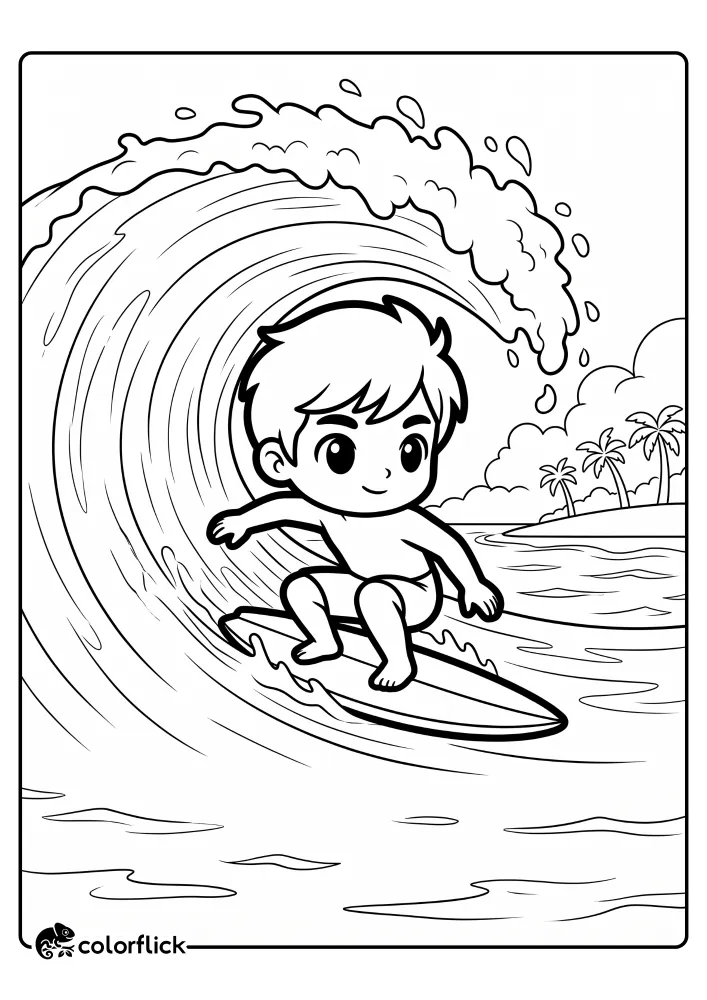
Kids don’t need to live near a beach to fall in love with the sea. These surfing coloring pages build real science knowledge, body awareness, and ocean respect — one wave at a time.
Grab Your Free Surfing Coloring Pages Collection Right Here
We’ve pulled together a beautiful, print-ready set of surfing pages covering everything from pop-up technique to marine life spotted beyond the break. Every page is designed to spark curiosity, not just keep little hands busy.
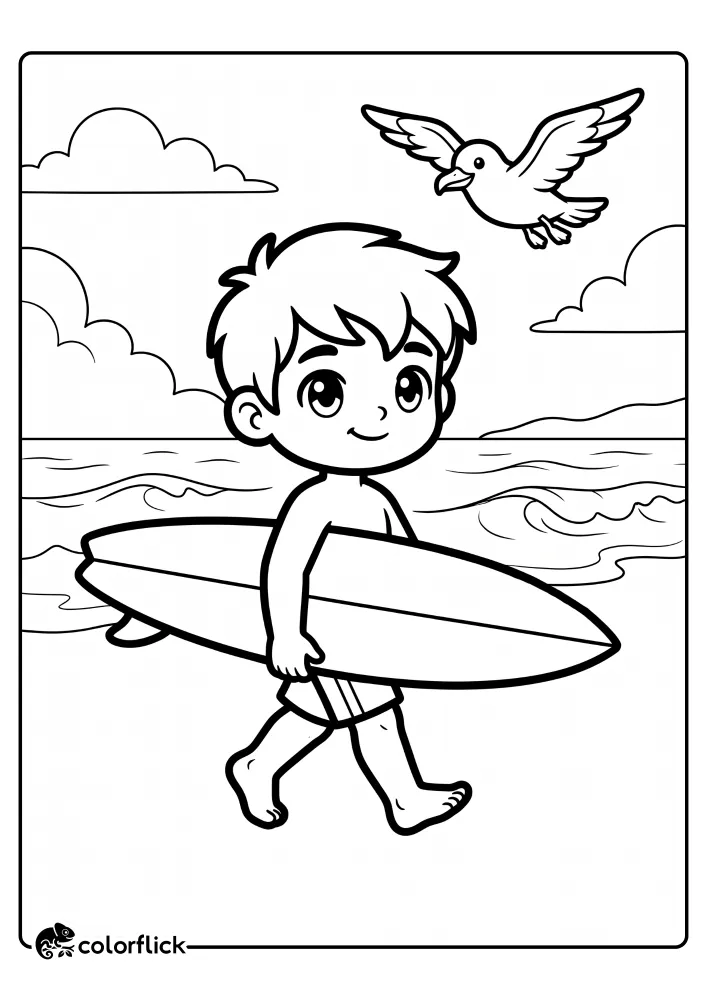
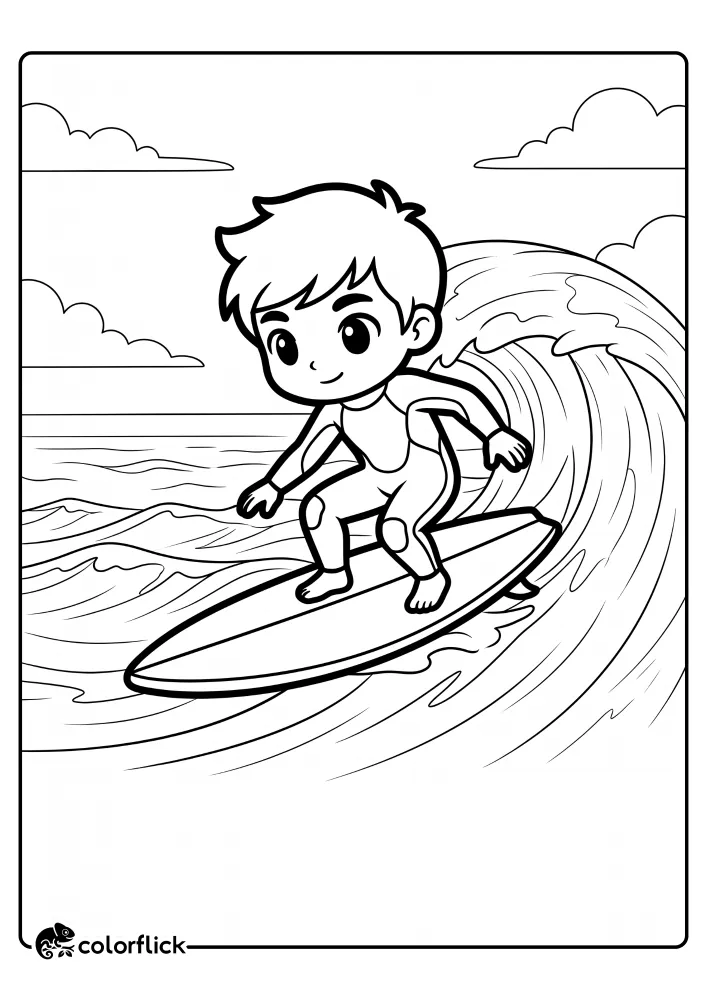
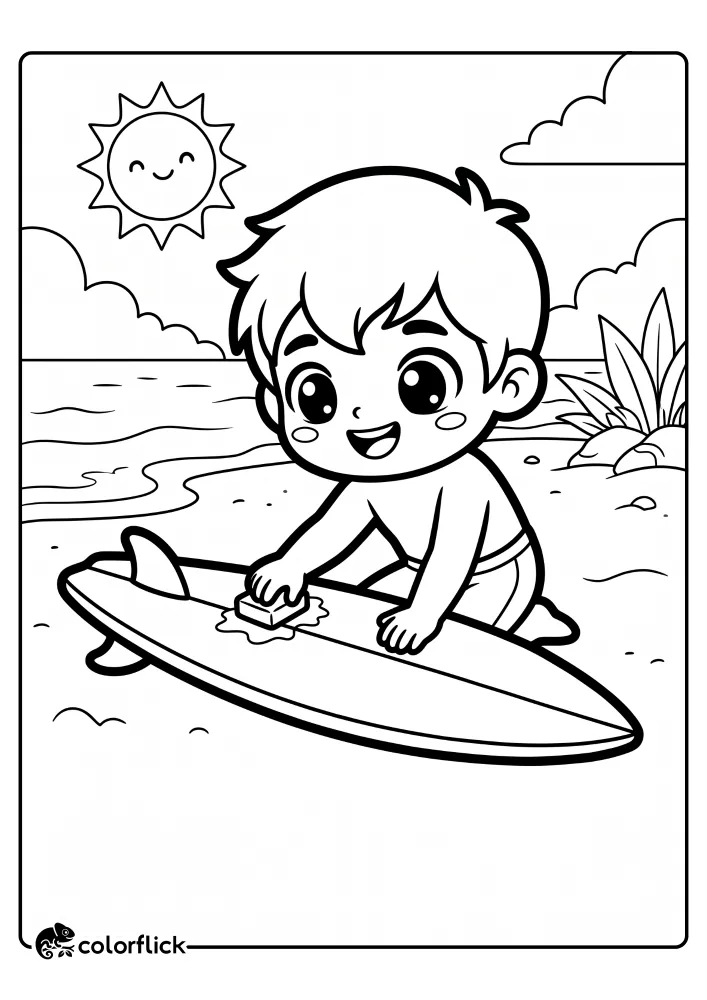
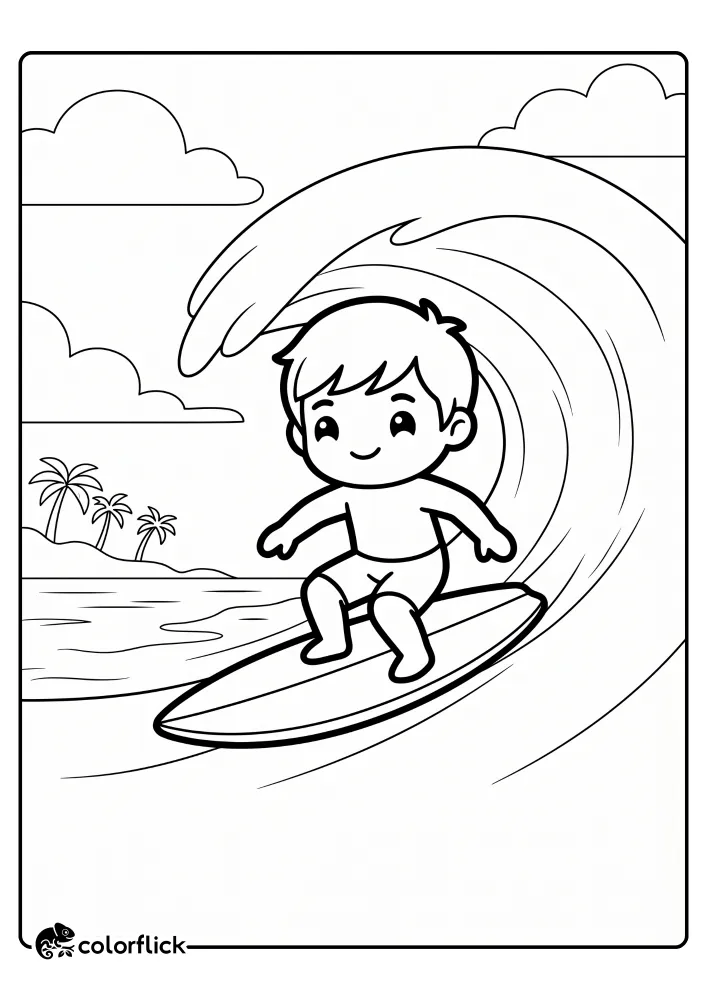
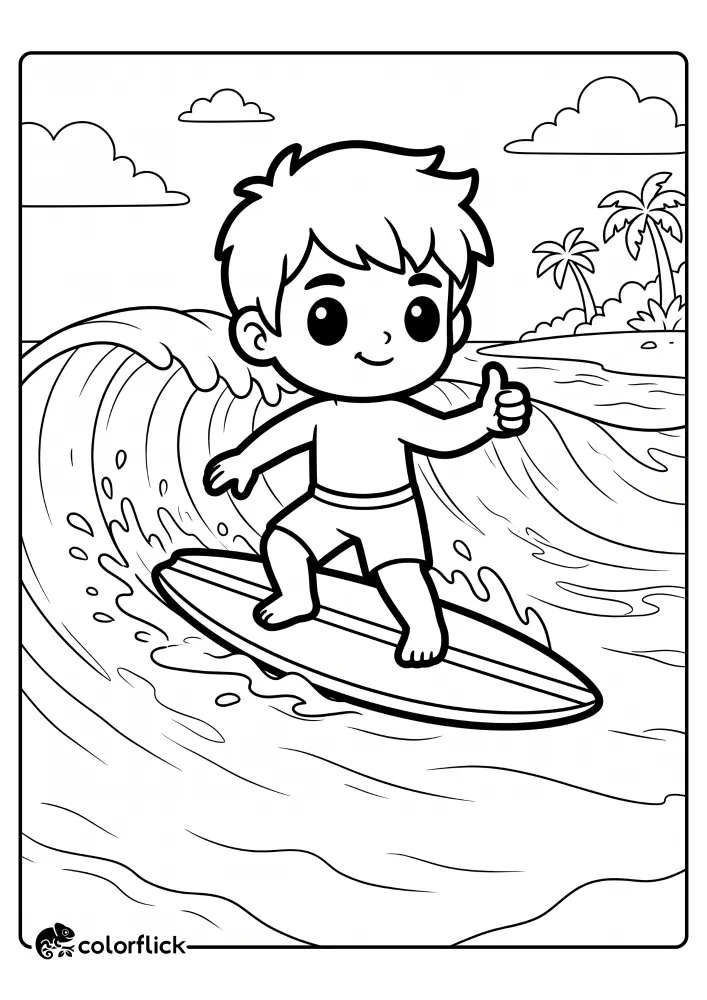
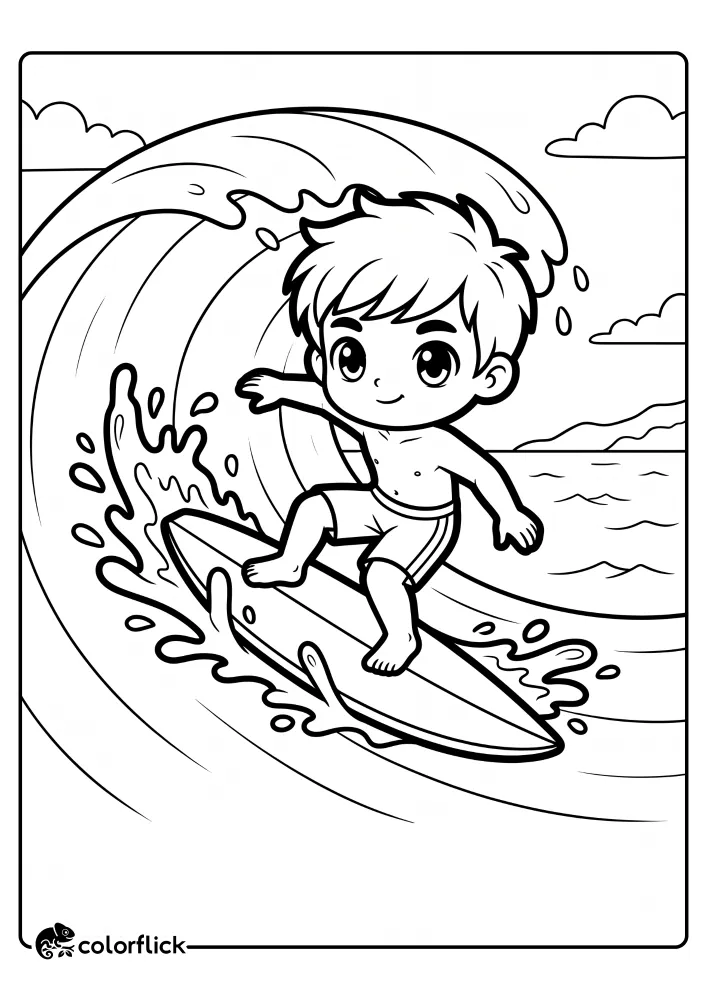
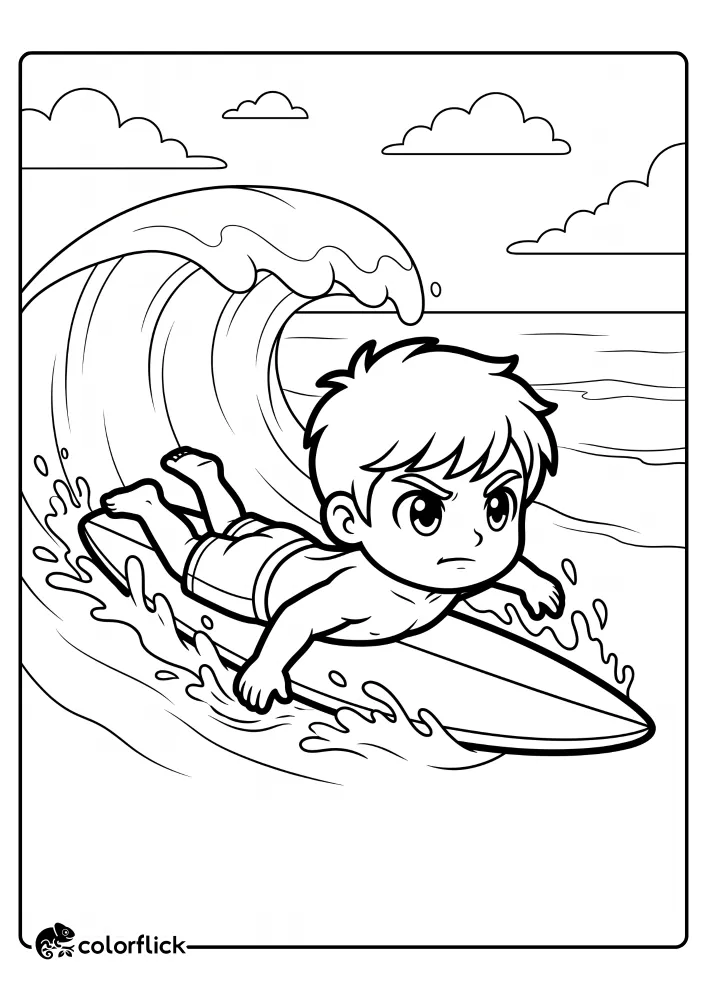
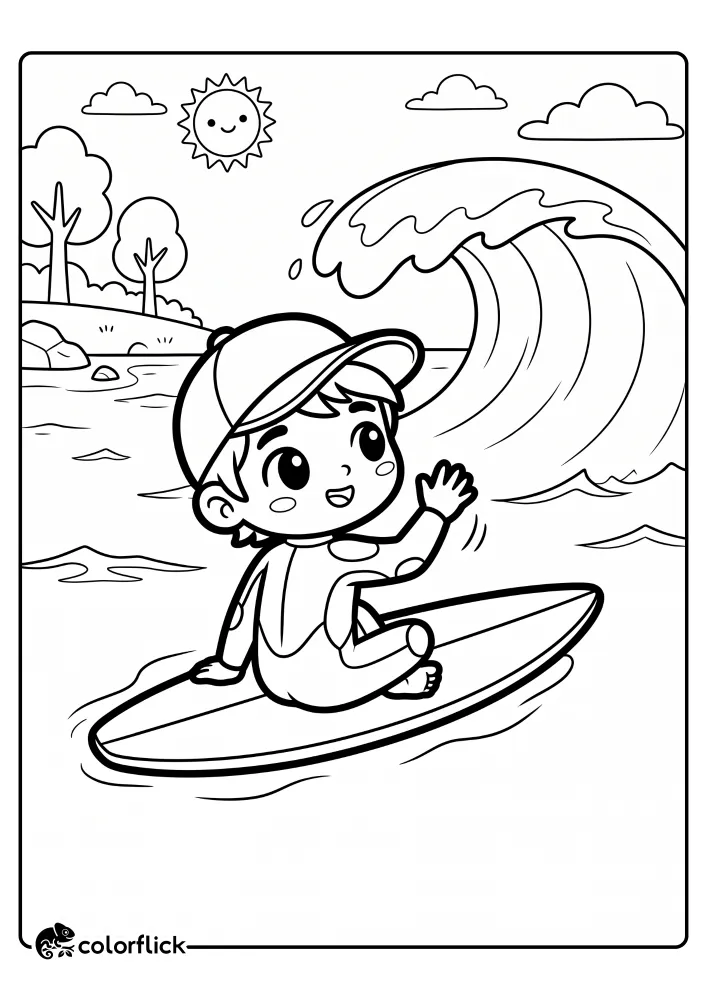
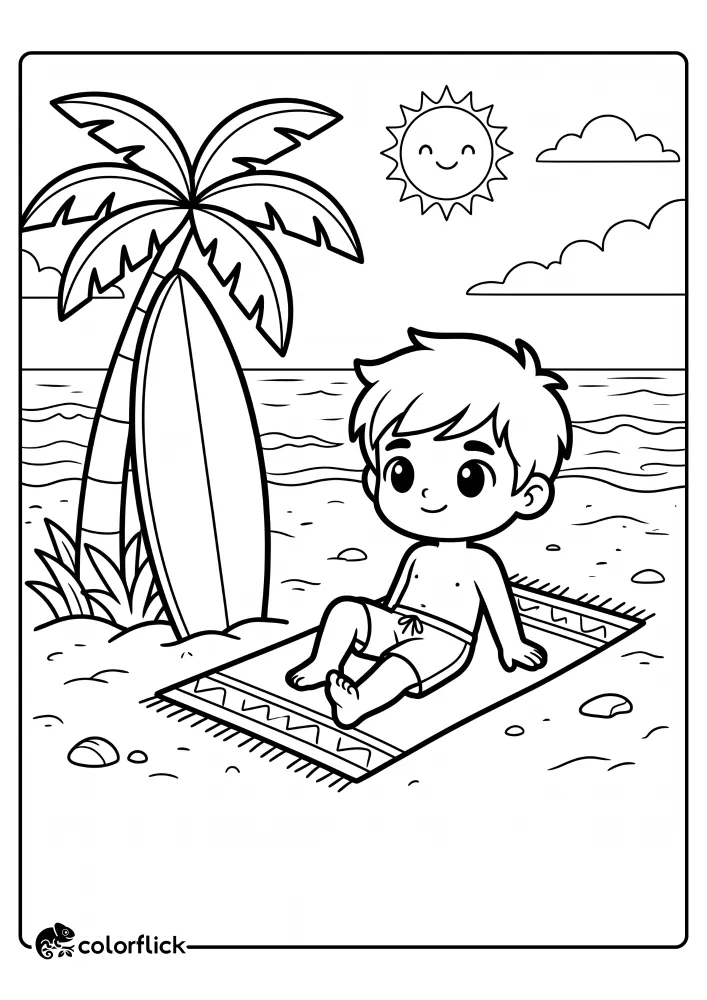
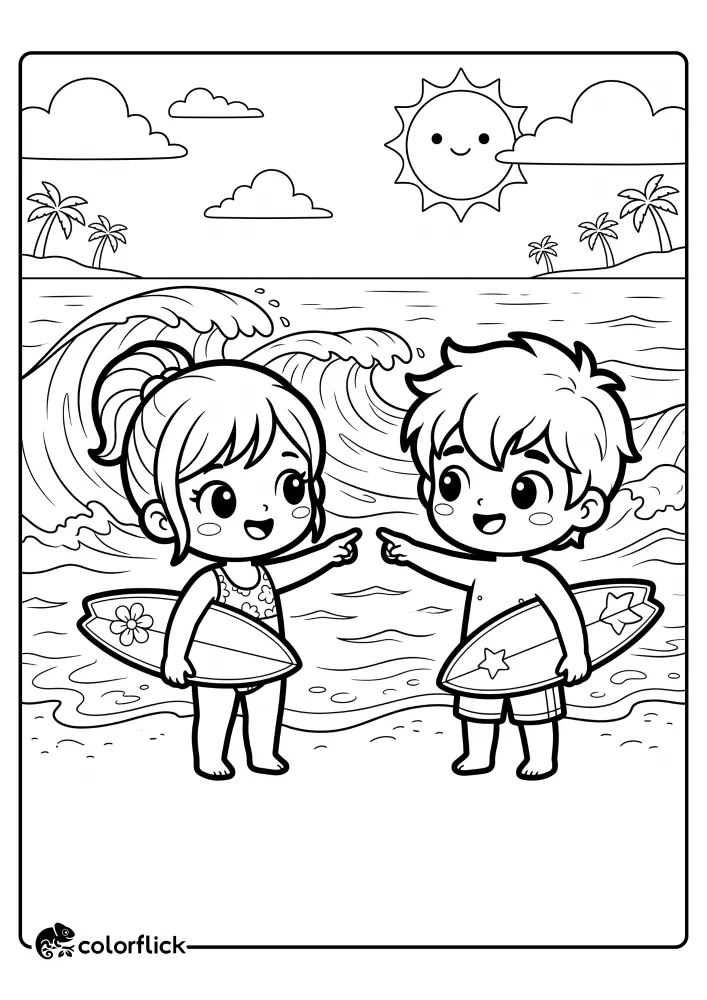
The Pop-Up: That Magic Moment of Standing Up
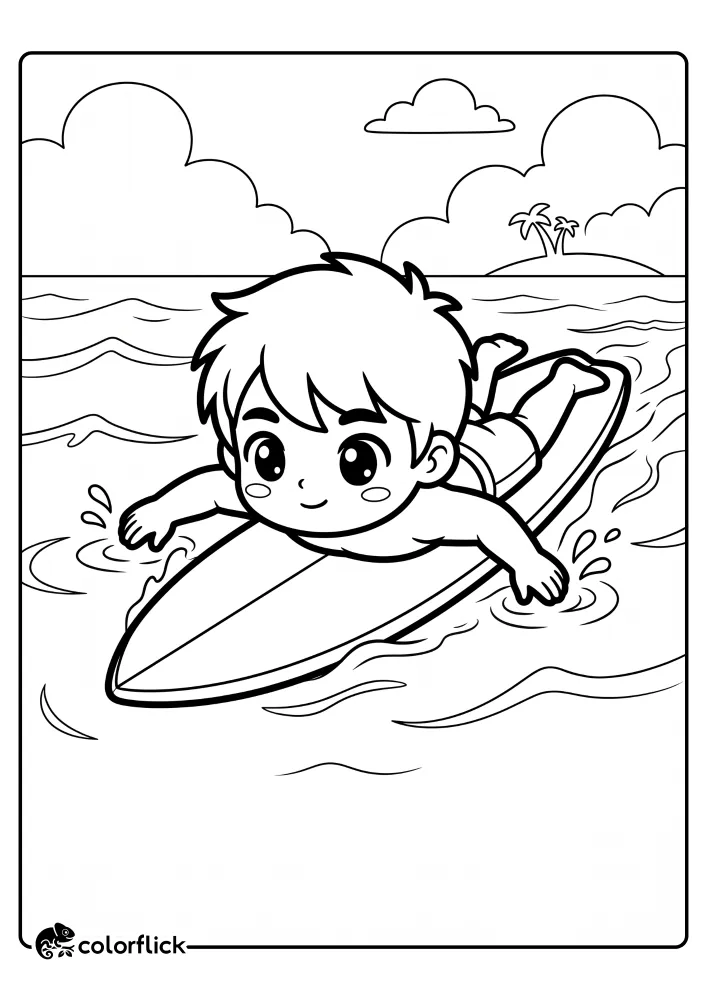
Three steps. That’s all it takes. Paddle, cobra pose, then stand.
The pop-up is the heartbeat of surfing — the split second where a surfer goes from lying flat (prone position) to balancing upright. Coloring the curve of outstretched arms and the bend of bent knees actually helps children internalize balance point awareness. Their brain maps the body. It’s quiet motor planning happening through a crayon.
And here’s the best part? Learning to wait for the right wave teaches patience before the standing even begins.
Every Part of the Board Has a Job
The nose cuts through water. The tail controls the turn. The rails hold the line.
When kids color distinct sections of a surfboard — the rounded nose, the sharp tail, the curved edges called rails — they’re building visual discrimination without even knowing it. The rocker is the gentle upward curve running from tail to nose. The leash plugs into the back and keeps surfer and board together.
One small history fact worth sharing: that thin wood strip running down the center of the board? That’s the stringer. Hawaiian Polynesian navigators invented it to strengthen early hollow wooden boards. Old engineering. Still used today.
Waves Don’t Just Happen. They Travel.
A ripple starts small. Wind blows across open water, friction builds, energy transfers. That tiny ripple grows into the wave your child just colored rolling toward shore.
Most beach waves are wind-driven. Tides, on the other hand, are pulled by the Moon and Sun’s gravity — a completely different force, same ocean. Coloring the shift from dark deep water to pale shallow foam helps children grasp how energy moves through water. Abstract science. Made visible with a blue crayon.
Tsunamis, by the way, come from seaquakes — earthquakes on the ocean floor. Different beast entirely.
Whitewash: The Safest Place to Start
It looks messy. Bubbly, frothy, chaotic.
But whitewash — that foamy surge where a wave collapses near shore — is a beginner’s best friend. It’s predictable. It’s shallow. It’s where every surfer on earth started. Coloring the contrast between white foam and blue water teaches texture representation through art. The stippled, uneven bubble pattern is genuinely tricky to fill in neatly, which is exactly the point. Fine motor control gets a real workout here.
A foam climb is an actual surf maneuver — riding the whitewash outward past the break. Beginners work up to it.
Safety Rules That Actually Stick When You Color Them
“Never turn your back on the ocean.”
Age-old advice. Surfers still say it. The leash keeps a rider connected to their board after a wipeout — that bright cord attached at the ankle is the first line of safety. The buddy system means no one surfs alone, ever. And if a rip current pulls you out? Swim sideways, parallel to the shore. Never fight it straight on.
Coloring safety gear in bold, bright colors reinforces the association between vivid hues and protection. Kids remember what they color.
Not All Boards Are the Same Shape — And That Matters
Long. Short. Wide. Narrow. Each shape has a purpose.
Longboards are longer, wider, and more stable — perfect for beginners and younger kids. Shortboards are responsive and quick, but they demand serious balance, better for older or more experienced surfers. Funboards blend both. Fish boards sit wide and low, built for smaller waves.
When a child colors each board type differently — a long stable shape versus a narrow pointed one — they’re doing categorical thinking. Sorting and classifying shapes. Quietly.
The Ocean Isn’t Empty: Marine Life Beyond the Break
Sea turtles sometimes drift past surfers. Fish dart below boards. Jellyfish float, indifferent.
Coloring marine animals alongside surf scenes teaches something important: the ocean is a living ecosystem, not just a playground. Rock pooling — crouching at shallow tide pools to observe crabs, anemones, and tiny fish — is a recommended companion activity to surf sessions. Ocean water smells salty and clean. Sharp and mineral. It’s worth describing that to a child as they color.
Environmental respect starts with noticing what’s already there.
Surfing Makes Kids Stronger in More Ways Than One
Arms, legs, core, back — surfing works all of it simultaneously. But the less obvious benefits? Balance, coordination, spatial orientation, and patience — all develop naturally when learning to read waves and hold a board steady.
Studies on motor development show surfing supports the same physical skills needed for riding a bike, catching a ball, or navigating a crowded hallway. The coloring extension reinforces this: tracing active poses helps children’s brains internalize dynamic movement patterns. Confidence builds quietly. Physically. Socially.
Make It With Your Hands: The Beach String Surfboard Craft
Print one of your favorite surfing pages. Cut it out. Then do something satisfying: outline the board’s edges with natural twine or rough jute string, pressing it into a thin line of school glue. Add a small shell at the nose — rushed-clean is fine, imperfect is better.
Back it with recycled cardboard. Let it dry bumpy and uneven.
That imperfection is the whole point. Handmade things should look handmade. The organic messiness of natural materials is what makes this ornament feel real and owned, not manufactured. No two will ever look alike. That’s worth celebrating.
Start a Conversation With Just One Question
Sometimes the best part of coloring isn’t the coloring. It’s what gets said during it.
Try these with your child — no right answers, just genuine curiosity:
- “What color would you choose for the ocean — dark blue for deep water, or light blue for shallow waves?”
- “If you were learning to surf, would you lie on the board first or try to stand straight away? Why?”
- “What ocean animal do you hope to spot while surfing — a turtle, a fish, or a jellyfish?”
One question. One conversation. You’ll be surprised what comes out.
The Ocean Is Waiting
Surfing teaches patience, builds strength, and opens up a whole world of ocean science — even before a child ever touches water. These pages are a starting point. Curious kids grow from here.
Head back to the Colorflick Surfing Coloring Pages gallery whenever you need a fresh page, a new conversation starter, or just a quiet afternoon well spent.